
A New Weight-Loss Drug Achieved Nearly 20% Weight Loss in Just 24 Weeks, Outpacing Leading Rivals in Early Trials
Evidence review & editorial synthesis
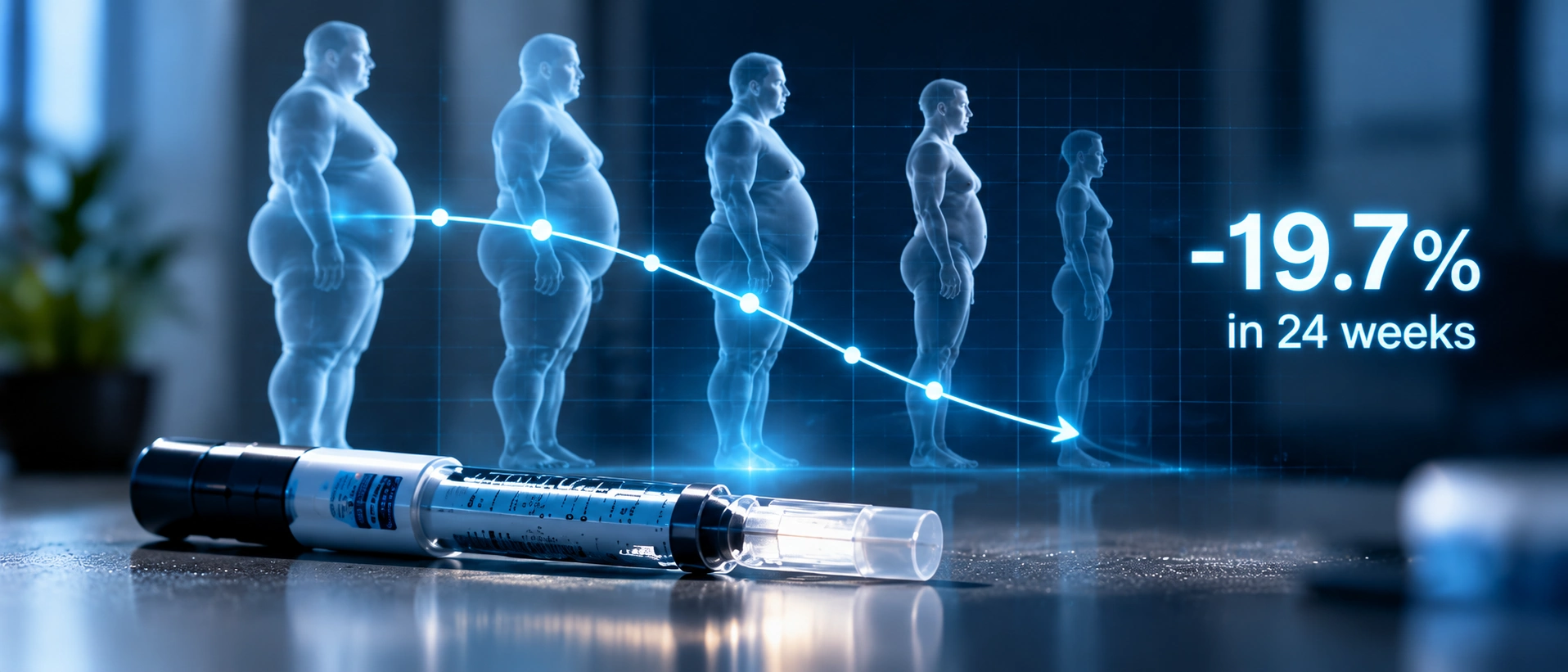
An experimental weight-loss injection has delivered one of the most striking six-month results yet reported for an obesity drug. In a randomized phase 2 trial, participants receiving the most effective dosing schedule of UBT251 lost an average of 19.7% of their starting weight in just 24 weeks. For someone starting at 100 kg, that is roughly 20 kg. The placebo group lost 2.0%. And when set beside published results from other powerful injections at the same 24-week mark, UBT251 looks like a serious new contender.
Nearly 20% Weight Loss in Six Months
The study, published in Cell Metabolism in October 2026, enrolled 205 adults with overweight or obesity who did not have type 2 diabetes. Participants received once-weekly injections of UBT251 at various doses or placebo for 24 weeks. The average weight reduction ranged from 13.6% to 19.7% across the active treatment groups, compared with 2.0% in the placebo group.
The strongest result came from a 4-mg treatment regimen that began with a 1-mg starting dose. The researchers also reported improvements in waist circumference, blood pressure, blood lipids and measures of glucose regulation. Those changes matter because obesity treatment is about more than the number on a scale: the longer-term goal is to reduce health risks and improve daily functioning.
A separate randomized phase 2 study enrolled 211 adults with type 2 diabetes. After 24 weeks, UBT251 improved blood sugar control and produced significantly more weight loss than semaglutide 1 mg, the dose used in that trial. This reinforces the drug's metabolic potential, although 1 mg semaglutide is not the higher 2.4-mg dose used specifically for obesity.
Could UBT251 Challenge the Strongest Weight-Loss Drugs?
UBT251 acts on three hormone receptors: GLP-1, GIP and glucagon. This so-called triple-agonist approach is designed to affect appetite, metabolism and blood sugar regulation through several pathways at once. It places the drug in the same experimental class as retatrutide, another closely watched obesity treatment.
The 24-week comparison is eye-catching. In its earlier randomized phase 2 obesity trial, retatrutide produced 17.5% average weight loss in its 12-mg group at week 24. UBT251 reached 19.7% in its best-performing group over the same period. Tirzepatide and semaglutide also produce substantial weight loss, but the published six-month results differ according to the trial, population, dose and escalation schedule.
That means UBT251 has numerically outpaced prominent published early-trial results, not definitively beaten the other drugs. No trial has directly randomized patients between UBT251 and retatrutide at equivalent treatment settings. Nor do we yet know whether UBT251's early advantage, if any, continues after six months. Retatrutide, for example, kept producing additional weight loss through 48 weeks in its phase 2 study.
What Happens Next?
UBT251 remains an investigational medicine, not an approved weight-loss injection. The 24-week studies are encouraging, but larger and longer trials must determine whether the results persist, how often treatment is discontinued and what the long-term safety profile looks like. Gastrointestinal symptoms were the most common side effects reported in the obesity trial, generally mild to moderate. The available data also do not establish that UBT251 prevents heart attacks or other long-term complications.
For readers exploring current ways to manage weight, the evidence-based fundamentals still matter. A sustainable nutrition plan and physical activity remain important whether or not medication is prescribed. A structured meal-replacement shake can help some people manage calorie intake; randomized trials suggest modest weight-management benefits, but the effect is not comparable to the dramatic losses reported for investigational injections. Our Metabolism & Weight Loss guide explores the broader evidence behind weight regulation.
The bigger story is the pace of obesity-drug development. Within a relatively short six-month trial, UBT251 achieved a level of average weight reduction that once required far longer treatment. Whether it ultimately becomes the most effective option is still an open question, but it is now a credible contender.
Scientific References & Further Reading
- Anchor Study: “UBT251 in adults with overweight or obesity: multicenter randomized phase 2 trial.” (Zhou Z, et al. Cell Metabolism. 2026. doi:10.1016/j.cmet.2026.09.021.)
- Related Trial: “UBT251 in adults with type 2 diabetes: randomized phase 2 trial.” (Zhou Z, et al. Cell Metabolism. 2026. doi:10.1016/j.cmet.2026.10.010.)
- Comparator Evidence: “Triple-Hormone-Receptor Agonist Retatrutide for Obesity.” (Jastreboff AM, et al. N Engl J Med. 2023. doi:10.1056/NEJMoa2301972.)
- Practical Evidence: “The effect of total and partial meal replacements on obesity: a systematic review and meta-analysis of randomized controlled trials.” (Crit Rev Food Sci Nutr. 2025. doi:10.1080/10408398.2025.2465768.)
Disclaimer: This article is for informational purposes only and does not constitute medical advice. It is not a substitute for diagnosis, treatment, or individualized medical care.