The Quantified Bedroom: The High-Performer’s Guide to Sleep Tech & Biometric Recovery
For decades, assessing the quality of your sleep was purely subjective. You woke up, evaluated how tired or groggy you felt, and adjusted your coffee intake accordingly.
Welcome to the era of Quantified Sleep.
Today’s elite athletes, Silicon Valley founders, and longevity biohackers no longer leave their recovery to guesswork. They use high-precision sensors, continuous thermal feedback loops, and circadian-spectrum lighting to actively engineer every single phase of sleep.
By tracking real-time biomarkers like Heart Rate Variability (HRV), Resting Heart Rate (RHR), and Core Temperature Flux, modern sleep technology transforms your bedroom from a passive sleeping space into a high-tech bio-recovery chamber.
If you want to move beyond basic sleep tracking and actively upgrade your recovery metrics, here is the ultimate guide to modern sleep hardware.
1. Biometric Trackers: Smart Rings vs. Smart Bands
You cannot optimize what you do not measure. The foundation of any high-tech sleep protocol starts with continuous biometric monitoring.
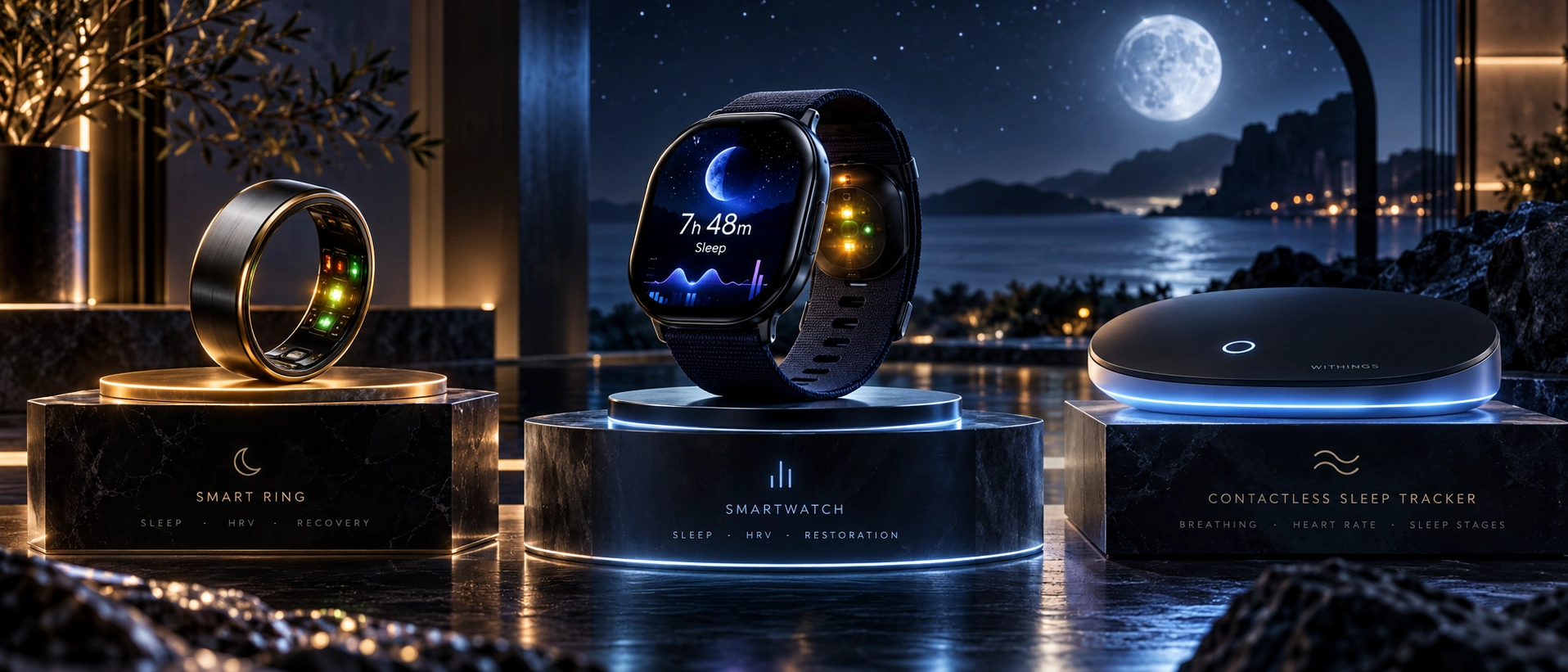
I. Smart Rings (Oura Ring)
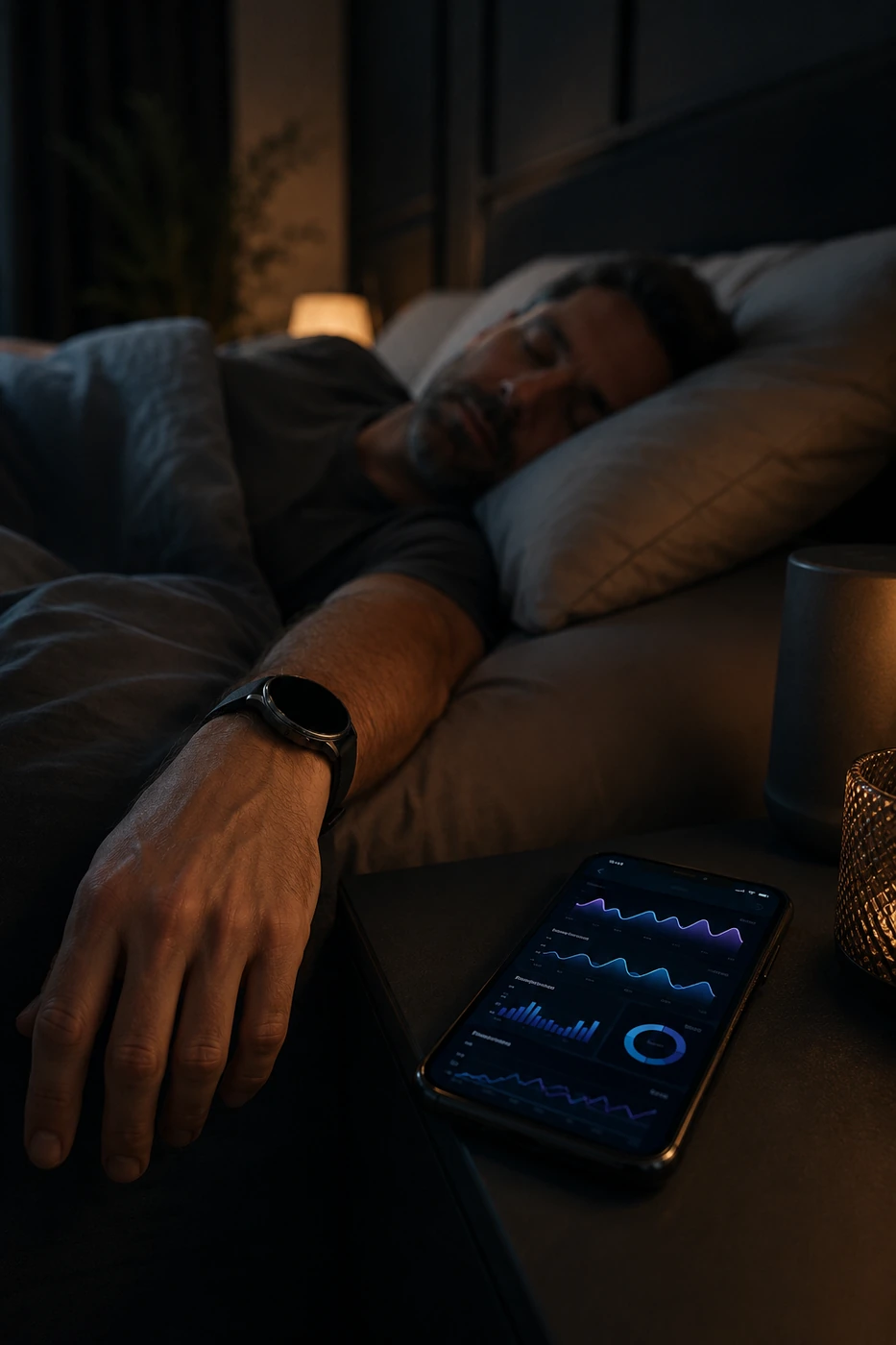 Continuous HRV and temperature tracking provide actionable data to fine-tune your evening protocols.
Smart rings utilize PPG (photoplethysmography) infrared sensors on the palmar arteries of your finger, where blood flow signals are significantly stronger than on the wrist. They excel at tracking:
- Heart Rate Variability (HRV): The primary metric indicating autonomic nervous system balance and recovery status.
- Body Temperature Deviations: Detecting early immune strain or hormonal fluctuations within 0.1°C accuracy.
II. Wearable Bands (Whoop / Apple Watch Ultra)
Continuous wrist-based or chest-based wearables track movement via multi-axis accelerometers and offer real-time Strain vs. Recovery algorithms, telling you precisely how hard you can push your physical workouts based on last night's slow-wave sleep.
2. Thermal Environment Control: Active Mattress Cooling
As explored in our deep sleep protocols, the body requires an internal temperature drop of 2°F to 3°F (1°C to 1.5°C) to enter and sustain stage N3 slow-wave sleep.
Traditional foam and spring mattresses trap body heat, creating a micro-climate heat sink that spikes night-time heart rate and triggers restless toss-and-turn cycles.
The Solution: Active Hydro-Cooling Pods
Devices like the Eight Sleep Pod or ChiliPad utilize micro-tubing embedded in a mattress cover to circulate temperature-controlled water throughout the night.
- Dynamic Autopilot Cooling: Advanced systems adjust temperature in real time based on your current sleep stage, cooling down heavily during early deep sleep, and warming up slightly in the morning to trigger natural cortisol release for an effortless wakeup.
3. Circadian Light Tech: Spectrum Management
Artificial blue light (450-480nm spectrum) hitting your eyes after sunset tricks the brain's master clock into believing it is still peak solar noon, completely shutting off pineal Melatonin secretion.
I. Precision Blue-Light Blocking Glasses
Not all amber glasses are equal. Clinical-grade sleep glasses feature specialized optical lenses that block 100% of light between 400nm and 550nm (both blue and green spectrums), allowing complete melatonin synthesis even in brightly lit environments.
II. Red Light Night Illumination (670nm)
Swapping overhead LED bulbs for pure 670nm deep red lamps in the evening eliminates melanopsin receptor activation in the retina, creating a peaceful neuro-chemical transition into sleep.
4. Advanced Neuro-Recovery: PEMF & Sound Machines
For those seeking peak cognitive reset, advanced bio-electric devices act directly on central brain wave oscillations:
- PEMF (Pulsed Electromagnetic Field) Therapy: Low-frequency PEMF mats emit natural Schumann resonance frequencies (7.83 Hz down to 0.5 Hz), enticing brain waves to synchronize into deep theta and delta sleep states.
- Pink & Brown Noise Generators: Unlike harsh white noise, Pink Noise decreases wave complexity and synchronizes slow-wave brain oscillations, verifiably extending deep sleep duration in human trials.
The High-Performance Sleep Tech Stack
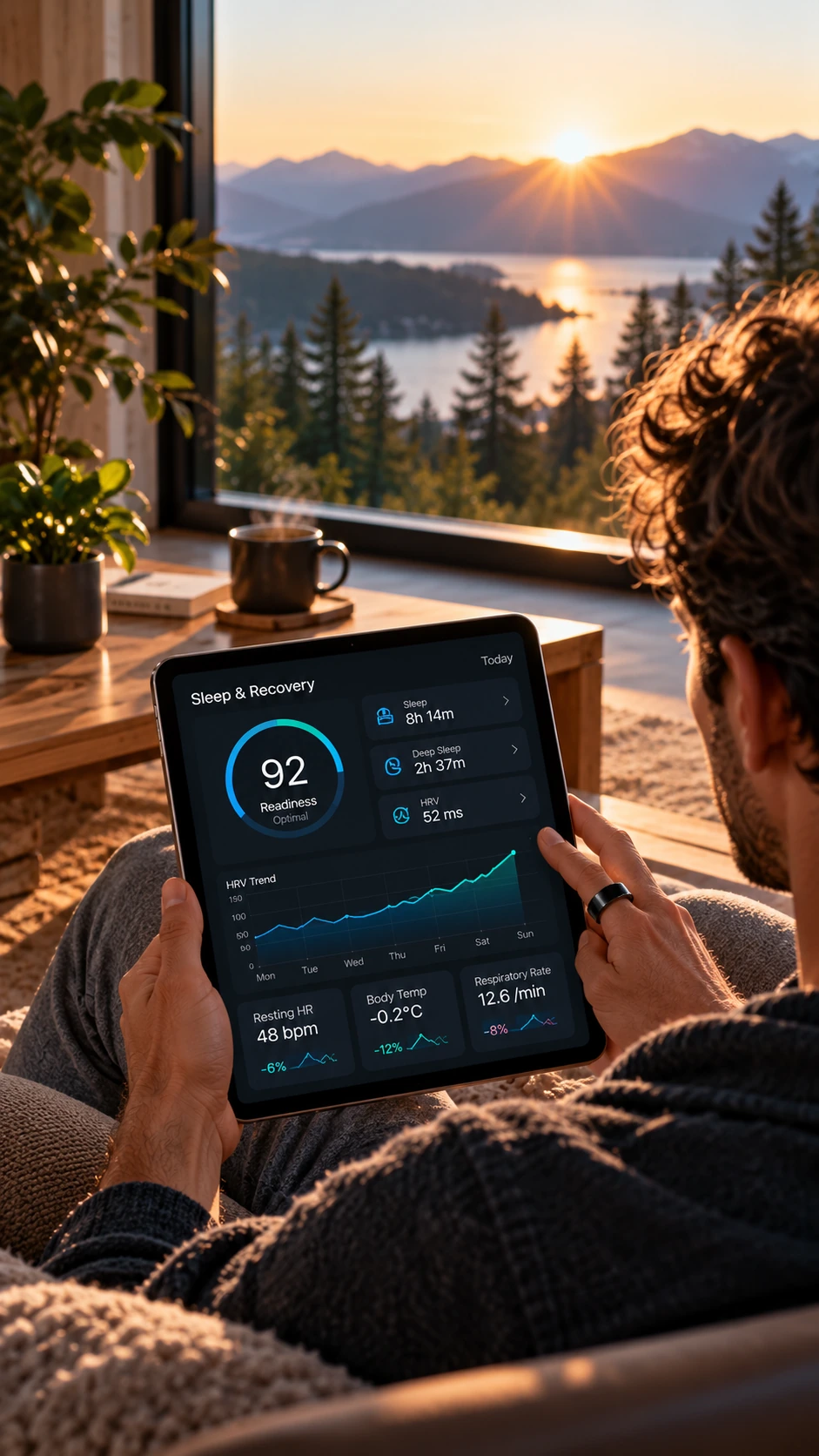 Morning sleep and recovery data turn overnight physiology into actionable insights for the day ahead.
To build a seamless, automated sleep environment, implement hardware in targeted phases:
Level 1: Biometric Baseline
- Wear a smart ring or wearable band continuously to establish your baseline HRV, resting heart rate, and sleep architecture breakdown.
Level 2: Circadian Environment Control
- Install pure red-spectrum bulbs in the bedroom and wear 100% blue/green blocking glasses 90 minutes before sleep.
Level 3: Active Thermal Optimization
- Upgrade to an active water-cooled mattress cover to automatically regulate your core temperature throughout the night.
The Future of Sleep is Automated
Sleep is no longer a passive variable that you leave to chance. With modern biometric tracking, active thermal regulation, and circadian lighting, your bedroom becomes a high-precision biological recovery tool.
Stop guessing how well you slept. Quantify, optimize, and dominate your recovery.
Scientific References & Reading List
-
Photopic Light Exposure & Melatonin Suppression: Brainard, G. C. et al. "Action spectrum for melatonin regulation in humans: evidence for a novel circadian photoreceptor." The Journal of Neuroscience 21(16), 6405-6412 (2001). Read Full Study on PubMed Central (PMC6763155) | Read on PubMed (PMID: 11487664) | DOI: 10.1523/JNEUROSCI.21-16-06405.2001
-
Heart Rate Variability (HRV) as a Biomarker of Recovery: Plews, D. J., Laursen, P. B., Stanley, J., Kilding, A. E., & Buchheit, M. "Training adaptation and heart rate variability in elite endurance athletes: opening the door to effective monitoring." Sports Medicine 43(9), 773-781 (2013). Read on PubMed (PMID: 23852425) | DOI: 10.1007/s40279-013-0071-8
-
Pink Noise & Slow-Wave Sleep Synchronization: Papalambros, N. A. et al. "Acoustic Enhancement of Sleep Slow Oscillations and Concomitant Memory Improvement in Older Adults." Frontiers in Human Neuroscience 11, 109 (2017). Read Full Study on PubMed Central (PMC5340797) | Read on PubMed (PMID: 28337134) | DOI: 10.3389/fnhum.2017.00109
Disclaimer: The information provided is for educational purposes only and is not intended as medical advice. Always consult with a qualified healthcare professional before starting any new health protocol or technology regimen.