The Quantified Self: How Smart Rings, Biosensors, and Vagus Stimulators are Revolutionizing Human Biometrics
For decades, tracking your health meant stepping on a scale once a week or visiting a clinic for an annual blood panel. The data was sparse, static, and entirely reactive.
Today, a massive technological shift known as The Quantified Self has placed clinical-grade diagnostic power directly onto our fingers, wrists, and nervous systems.
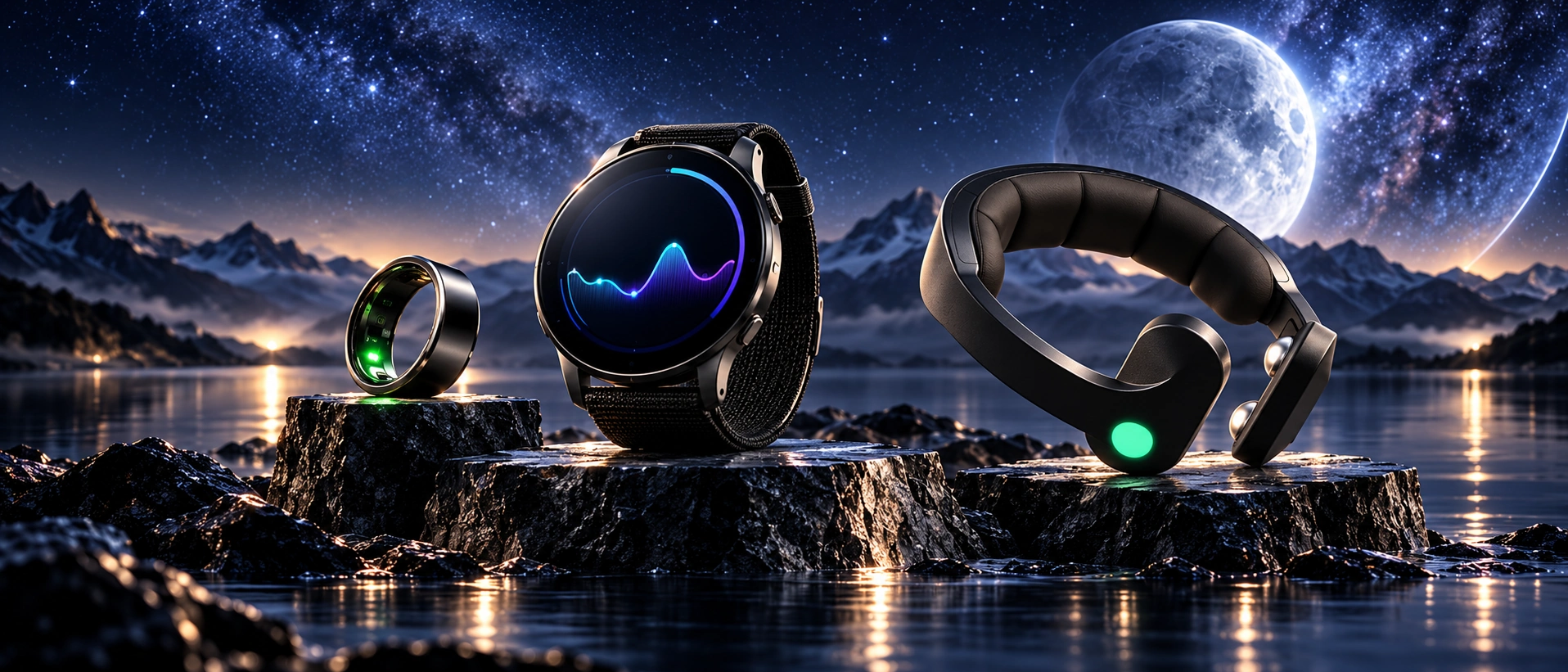
Modern bio-wearables, ranging from sophisticated smart rings and multi-sensor smartwatches to continuous glucose monitors and wearable vagus nerve stimulators, allow us to decode our internal biology in real time.
If you want to move away from subjective guessing and master your recovery, stress resilience, sleep architecture, and biological age, here is the ultimate guide to the modern bio-tracking ecosystem.
1. The 4 Pillars of Modern Bio-Tracking Ecosystems
To build an effective personal data dashboard, you need to understand what each class of device measures and how they interconnect:
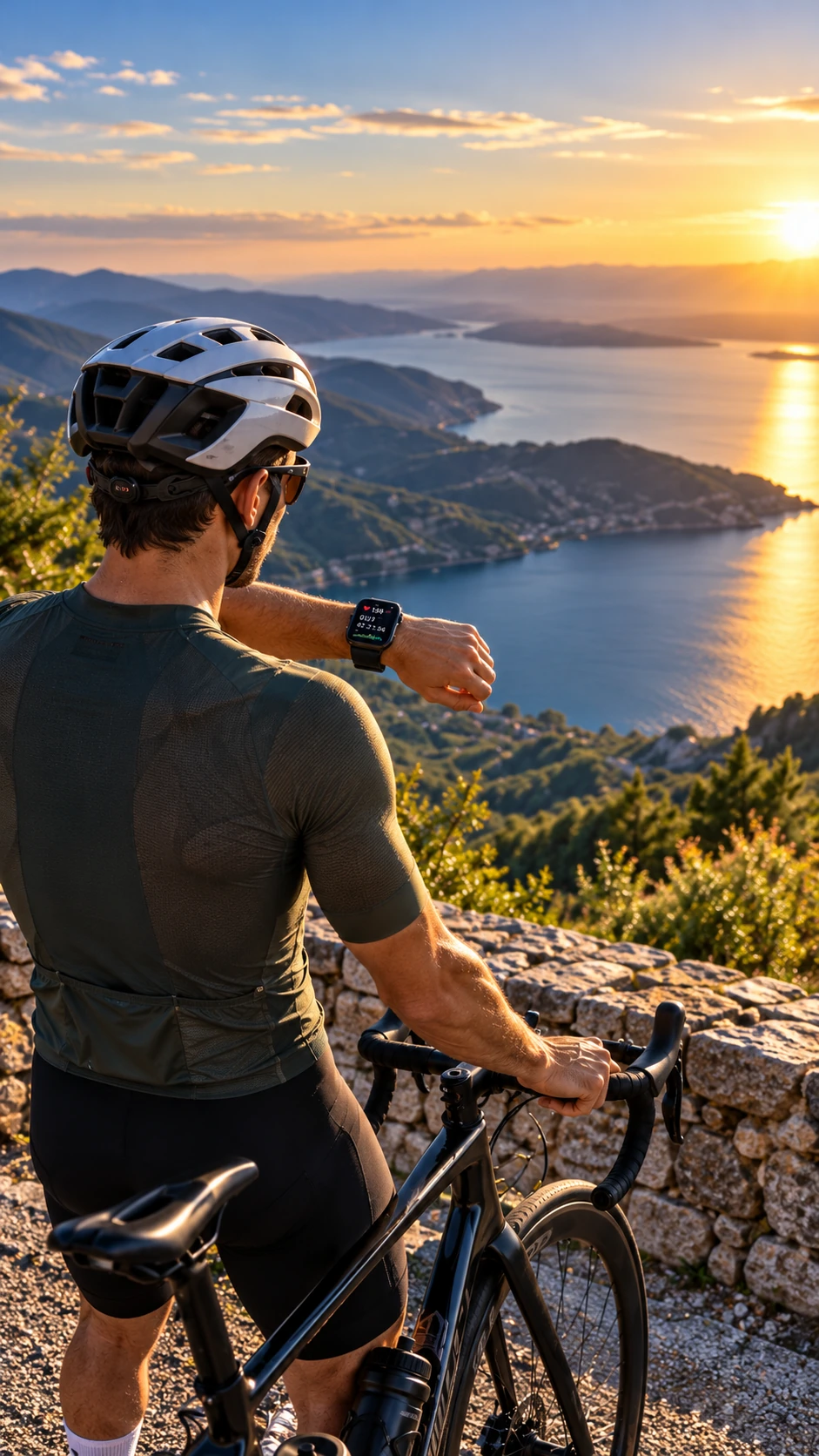 Real-time performance data helps athletes turn every ride into measurable progress.
I. Smart Rings (Recovery & Sleep Architecture)
Devices like the Oura Ring or Ultrahuman represent the pinnacle of nocturnal and baseline recovery tracking. Worn on the finger, where blood flow signals are exceptionally clear, they measure resting heart rate (RHR), skin temperature variations, respiratory rate, and Heart Rate Variability (HRV) throughout every sleep stage.
II. Advanced Smartwatches & Biometric Hubs
High-end watches (such as Apple Watch Ultra or Garmin ecosystems) excel at active daytime tracking, capturing VO2 max, continuous cardiac load, real-time blood oxygen (SpO2), and mechanical movement patterns during workouts.
III. Continuous Metabolic Biosensors (CGMs)
Continuous Glucose Monitors pierce the interstitial fluid to stream raw glycemic data 24/7, showing you precisely how specific meals, stress spikes, and workouts impact your metabolic stability.
IV. Neuromodulation & Vagus Nerve Devices (Stress & Parasympathetic Control)
Unlike passive trackers, wearable devices like Apollo Neuro, Pulsetto, or Nurosym actively intervene. By delivering gentle micro-vibrations or electrical pulses to vagus nerve pathways (either on the wrist, chest, or neck), they stimulate the parasympathetic nervous system, instantly shifting your body out of chronic fight-or-flight mode.
2. The Core Metrics That Actually Matter
With thousands of data points streaming into your smartphone every day, it is easy to suffer from data paralysis. To drive actual performance gains, focus exclusively on these four master metrics:
I. Heart Rate Variability (HRV)
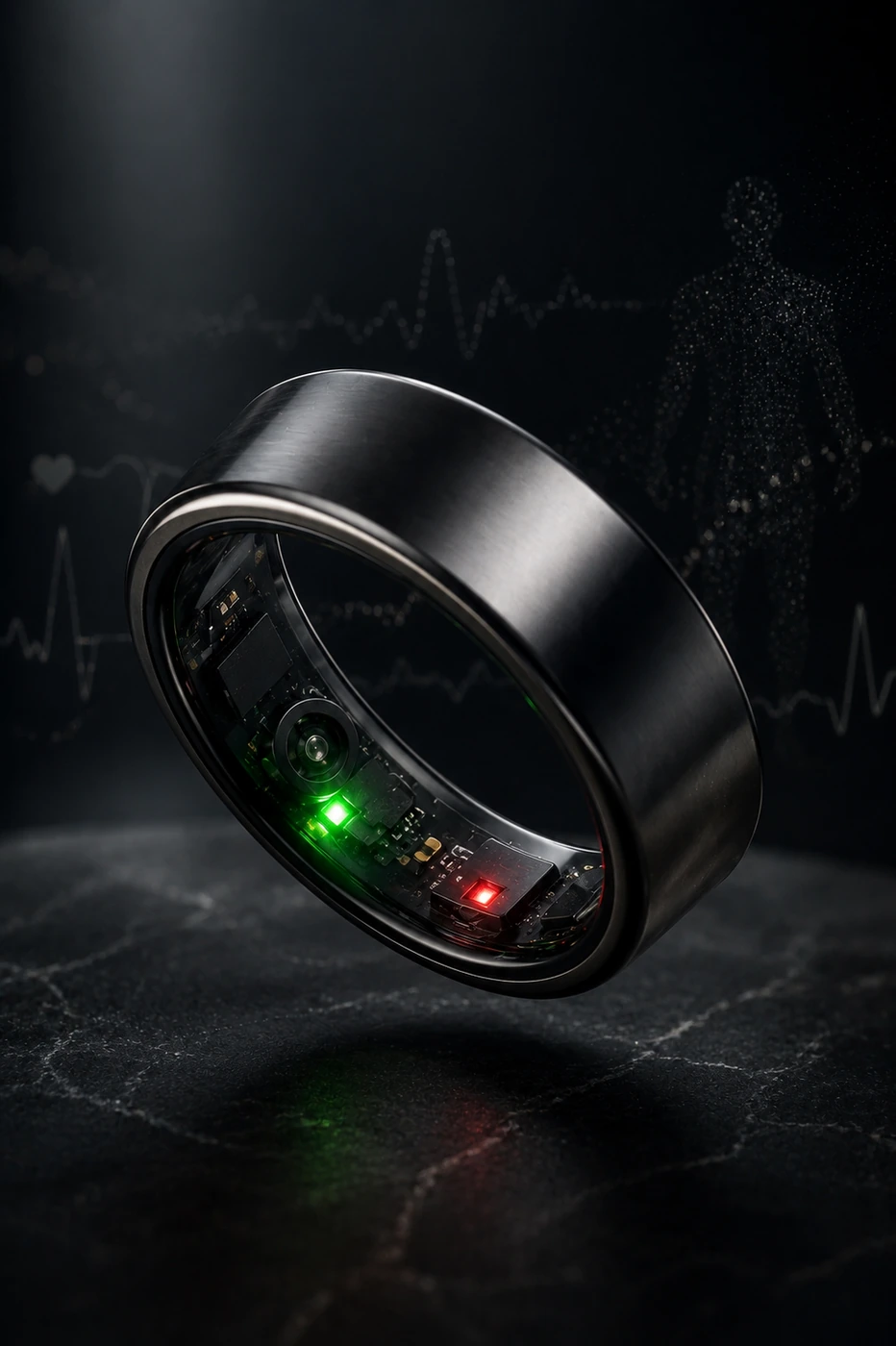 Smart rings and multisensor wearables can continuously track recovery-related metrics such as heart rate, HRV, temperature, and sleep.
HRV measures the microscopic time fluctuations between consecutive heartbeats. A high HRV indicates a flexible, resilient autonomic nervous system capable of shifting seamlessly between sympathetic (stress/action) and parasympathetic (rest/recovery) states.
II. Deep & REM Sleep Architecture
Total sleep duration is secondary to sleep architecture. Your wearables track the percentage of restorative Slow-Wave Sleep (physical repair) and REM Sleep (neuro-cognitive consolidation), allowing you to correlate evening habits with actual biological restoration.
III. Resting Heart Rate (RHR) Trends
A declining baseline RHR over weeks and months is the gold-standard indicator of improving cardiovascular fitness and mitochondrial efficiency. A sudden spike in RHR signals impending immune illness, overtraining, or late-night alcohol disruption.
3. The Protocol: How to Use Wearables Without Obsessing
While bio-tracking is a powerful tool, it can backfire if metrics trigger anxiety (a phenomenon biohackers call orthosomnia, stressing out over bad sleep scores). Follow these rules to keep technology serving you:
 Vagus nerve stimulation is designed to support relaxation by engaging the body’s parasympathetic nervous system.
Step 1: Establish Your Personal Baseline
Do not react to a single bad night of sleep or a low HRV score. Ignore daily fluctuations for the first 14 days and establish your unique rolling personal baseline.
Step 2: Use Active Interventions (Vagus Nerve Stimulation)
When your wearable detects a chronically elevated heart rate or a drop in HRV during the workday, deploy active parasympathetic tools: use a wearable vagus nerve stimulator for 10 minutes or execute slow, resonant box-breathing to force autonomic down-regulation.
Step 3: Audit Your Lifestyle Experiments
Treat your body as an N=1 laboratory. Use your wearable to test specific interventions, such as eliminating alcohol, shifting dinner 3 hours before bed, or taking magnesium glycinate, and measure the exact percentage impact on your recovery score.
Fix Your Cellular Battery: Read Our Protocol on Mitochondrial Energy and Fatigue Elimination
Decode Your Biology, Own Your Performance
Wearables and biosensors transform health from a guessing game into an exact science. By tracking your autonomic nervous system, optimizing your sleep architecture, and utilizing active neuromodulation tools, you take absolute control of your physical and mental output.
Stop guessing how your body feels. Measure it, master it, and optimize it.
Scientific References & Reading List
-
Heart Rate Variability (HRV) as a Biomarker of Stress & Health: Shaffer, F., & Ginsberg, J. P. "An Overview of Heart Rate Variability Metrics and Norms." Frontiers in Public Health 5, 258 (2017). Read Full Study on PubMed Central (PMC5624990) | Read on PubMed (PMID: 29034226) | DOI: 10.3389/fpubh.2017.00258
-
Wearable Biosensors in Clinical & Preventative Medicine: Guk, K. et al. "Evolution of Wearable Devices with Real-Time Disease Monitoring for Personalized Healthcare." Nanomaterials 9(6), 813 (2019). Read Full Study on PubMed Central (PMC6631918) | Read on PubMed (PMID: 31146479) | DOI: 10.3390/nano9060813
-
Vagus Nerve Stimulation & Autonomic Regulation: Yuan, H., & Silberstein, S. D. "Vagus Nerve and Vagus Nerve Stimulation, A Comprehensive Review: Part I." Headache 56(1), 71-78 (2016). Read on PubMed (PMID: 26364692) | DOI: 10.1111/head.12647
Disclaimer: The information provided is for educational purposes only and is not intended as medical advice. Always consult with a qualified healthcare professional before starting any new health protocol or bio-tracking regimen.