
The Glucose Rollercoaster: How Blood Sugar Volatility Kills Energy, Drives Inflammation, and How to Flatten the Curve
For decades, blood sugar management was viewed as a niche medical concern exclusively reserved for individuals diagnosed with pre-diabetes or Type 2 diabetes.
If your fasting glucose fell within the standard laboratory reference range, you were told your metabolism was fine.
Modern continuous glucose monitoring (CGM) and metabolic research have completely upended that assumption. Millions of metabolically healthy individuals experience violent glucose rollercoasters every single day, massive spikes followed by reactive crashes, triggered not by candy bars, but by seemingly "healthy" breakfast bowls, oat milk lattes, and fruit smoothies.
Every time your blood glucose spikes sharply, your pancreas floods your bloodstream with insulin. This sudden crash leaves you ravenous, fatigued, and inflamed at a cellular level.
If you want to unlock boundless energy, eliminate brain fog, and protect your long-term cellular health, you must learn to flatten your glucose curve. Here is the ultimate science-backed protocol to master your blood sugar.
1. The Anatomy of a Glucose Spike: Inflammation & Glycation
When you consume refined carbohydrates or simple sugars on an empty stomach, glucose floods your bloodstream faster than your cells can absorb it. This rapid concentration surge triggers three destructive biological processes:
I. The Reactive Hypoglycemia Crash
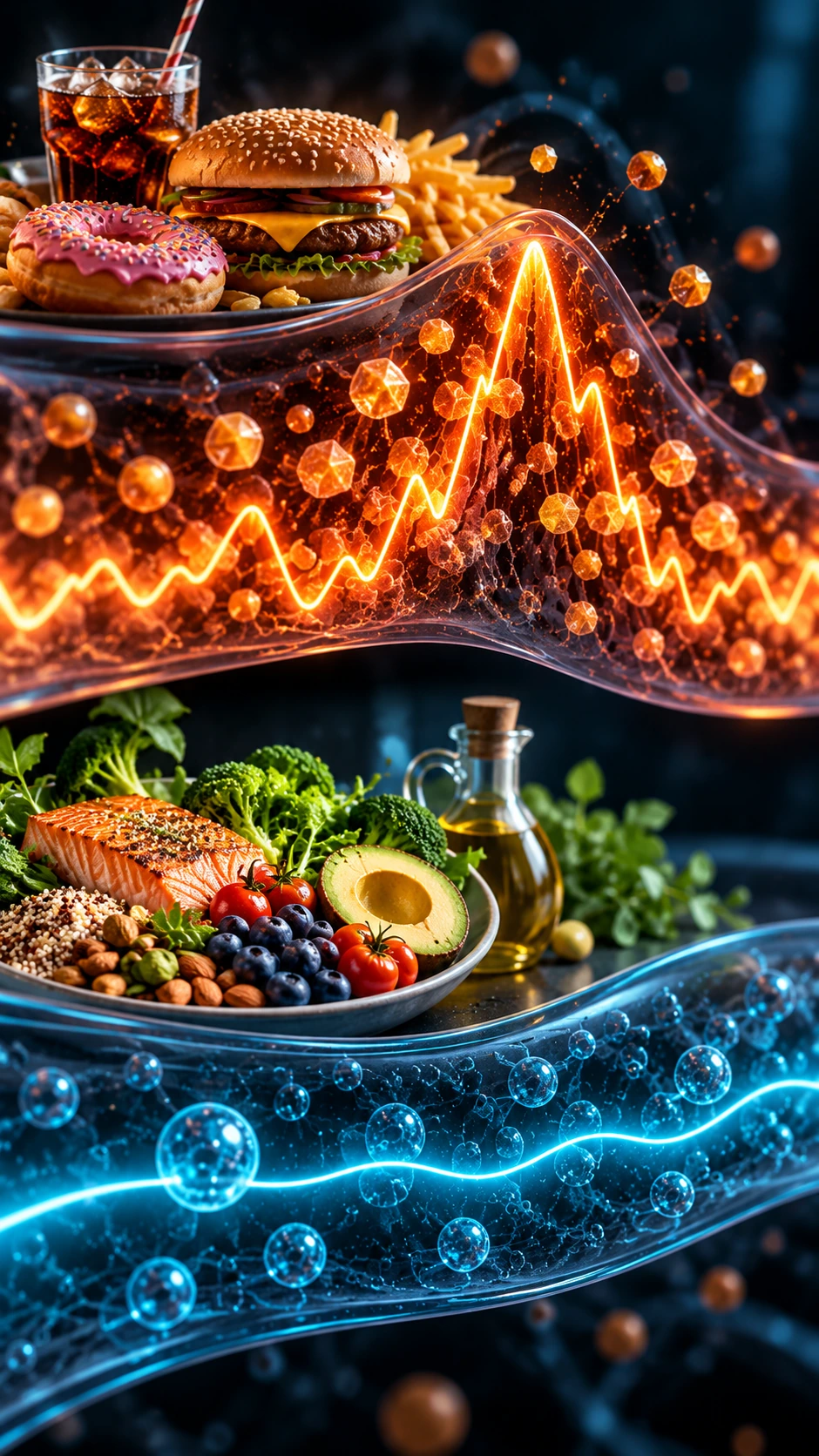 Flattening your daily glucose curve eliminates energy crashes, protects mitochondrial integrity, and prevents chronic cellular glycation.
To clear the sudden influx of sugar, your pancreas overshoots, releasing a massive wave of insulin. This aggressive insulin response drives your blood glucose down below your baseline fasting level. Your brain senses this sudden energy deficit as a localized crisis, triggering an emergency adrenaline surge that manifests as anxiety, shakiness, brain fog, and intense sugar cravings.
II. Advanced Glycation End-Products (AGEs)
Excess circulating glucose molecules spontaneously bind to proteins and lipids throughout your body in a non-enzymatic reaction called Glycation. This forms permanent cross-links known as Advanced Glycation End-Products (AGEs), which stiffen your arterial walls, accelerate skin aging, and degrade collagen structures.
III. Mitochondrial Oxidative Stress
High-amplitude glucose fluctuations generate reactive oxygen species (ROS) inside endothelial cells, directly damaging mitochondrial membranes and accelerating systemic low-grade inflammation.
2. The 3 Master Drivers of Metabolic Volatility
To stabilize your energy and protect your metabolic flexibility, you must eliminate the hidden triggers of blood sugar spikes:
I. The "Naked Carb" Phenomenon
Consuming carbohydrates (bread, fruit, rice, oats) completely isolated from proteins, fats, or fiber allows glucose to hit the small intestinal wall unhindered, causing an immediate vertical spike.
II. The Liquid Sugar Trap
Fruit juices, smoothies, and sweetened coffees bypass the mechanical chewing phase entirely. Stripped of cellular fiber matrices, fructose and glucose flood the liver instantaneously, promoting hepatic fat accumulation (non-alcoholic fatty liver disease) and insulin resistance.
III. Circadian Misalignment & Late-Night Eating
Insulin sensitivity is naturally highest in the morning and lowest late at night. Consuming high-carbohydrate meals within three hours of sleep impairs nocturnal growth hormone release and spikes morning fasting glucose.
3. The Flat-Curve Protocol: 5 Hacks to Stabilize Blood Sugar
You do not need to eliminate carbohydrates entirely to achieve metabolic stability. By altering how and when you eat, you can flatten your glucose curve by up to 75%:
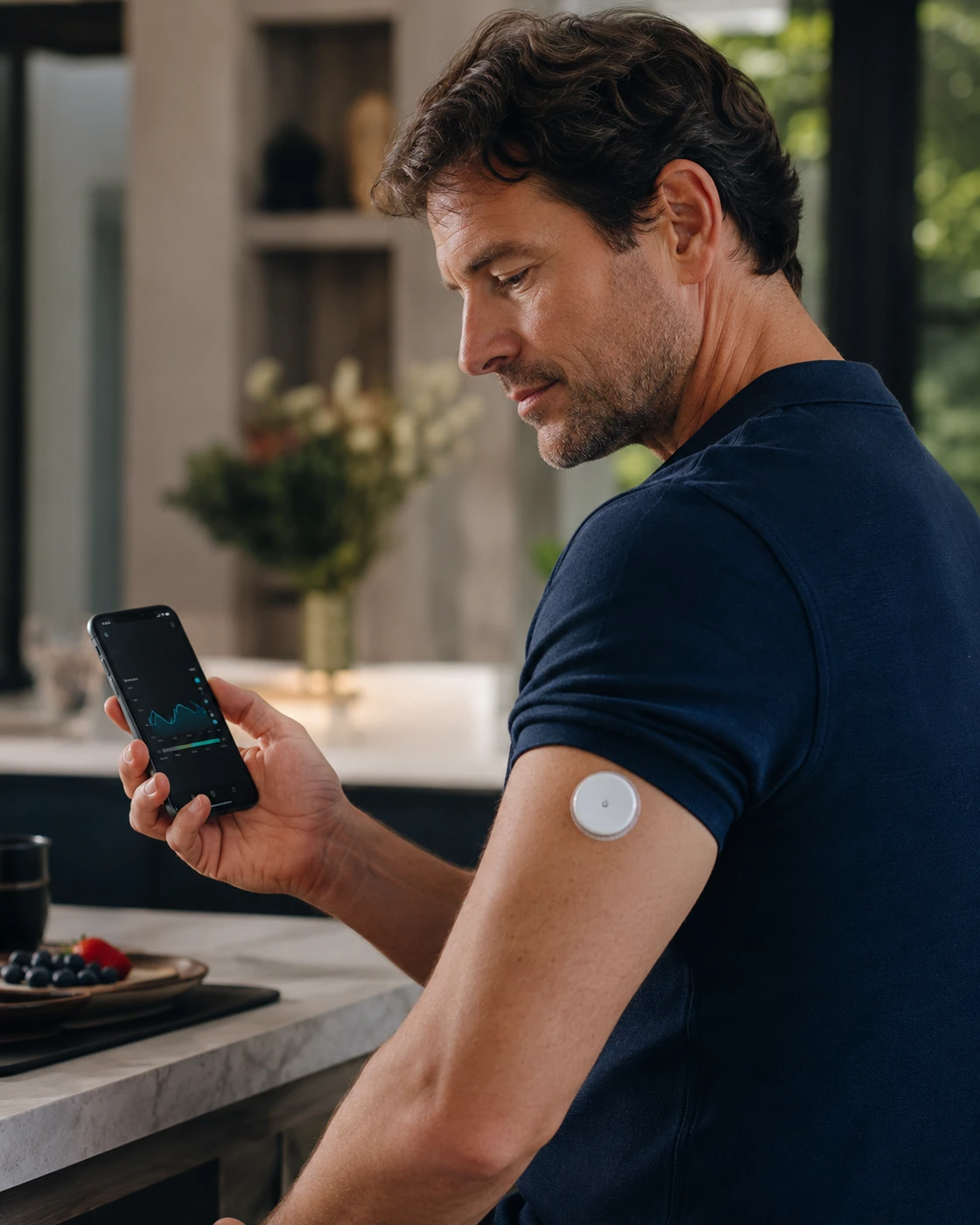 Spiky glucose curves drive rapid insulin surges and oxidative stress, whereas flattened curves maintain steady mitochondrial ATP production.
Hack 1: Harness Real-Time Biofeedback via Continuous Glucose Monitoring (CGM)
Generic dietary advice fails because glucose responses are highly individualized. A meal that keeps one person's blood sugar completely stable might trigger a violent glucose spike in another due to differences in gut microbiome composition, baseline insulin sensitivity, and sleep quality.
Wearing a Continuous Glucose Monitor (CGM) eliminates the guesswork. By tracking your interstitial glucose dynamics in real time via a smartphone app, you can pinpoint your exact personal trigger foods, test how walking or vinegar alters your response, and optimize your metabolic flexibility with clinical precision.
Hack : Activate the Post-Meal Muscle Sink
Take a 10-to-15-minute brisk walk within 60 minutes after finishing a meal. Contracting skeletal muscles pull glucose directly out of the bloodstream via GLUT4 transporters without requiring insulin, acting as an immediate metabolic sponge.
Hack 3: Deploy the Pre-Meal Vinegar Protocol
Consume one tablespoon of apple cider vinegar diluted in a large glass of water 15 to 20 minutes before a carbohydrate-rich meal. Acetic acid temporarily inhibits the enzyme alpha-amylase, slowing down the breakdown of starches into glucose.
Optimize Your Microbiome: Read Our Guide on Short-Chain Fatty Acids and Gut Barrier Integrity
Hack 4: Change the Food Order (The Sequence Trick)
 Berberine can help support healthier post-meal glucose control by activating AMPK and improving cellular glucose uptake
Always eat your meal components in a specific order: Fiber first, Proteins and Fats second, Starches and Sugars last. Eating vegetables and protein first creates a viscous mesh in the upper small intestine that delays gastric emptying, blunting the subsequent glucose peak by up to 73%.
Hack 5: Deploy Targeted AMPK Activators (Berberine Phytosome)
When lifestyle interventions require an extra metabolic leverage point, specific natural compounds offer targeted enzymatic support for glucose clearance.
Berberine, a bioactive alkaloid extracted from various plants, activates AMP-activated protein kinase (AMPK), often referred to as the body's master metabolic switch. AMPK activation increases GLUT4 transporter translocation, promoting cellular glucose uptake independently of high insulin levels. Opting for a advanced Phytosome formulation dramatically improves intestinal absorption, helping to blunt post-meal glucose spikes and support long-term vascular health.
Suffer From Afternoon Slumps? Read Our Complete Protocol to Recharge Your Cellular Battery
Master Your Glucose, Reclaim Your Energy
Stable blood sugar is the bedrock of vibrant health. When you stop riding the daily glucose rollercoaster, your energy normalizes, inflammation plummets, and your brain operates with razor-sharp clarity.
Stop accepting energy crashes as an inevitable part of your day. Flatten your curve and unleash your metabolic potential.
Scientific References & Reading List
-
Postprandial Walking & Glucose Control: Reynolds, A. N. et al. "Advice to walk after meals is more effective for reducing postprandial glycaemia in type 2 diabetes than advice that is not timed: a randomised crossover study." Diabetologia 59(12), 2572-2578 (2016). Read on PubMed (PMID: 27747394) | DOI: 10.1007/s00125-016-4085-2
-
Vinegar / Acetic Acid & Glucose Response Blunting: Johnston, C. S. et al. "Vinegar improves insulin sensitivity to a high-carbohydrate meal in subjects with insulin resistance or type 2 diabetes." Diabetes Care 27(1), 281-282 (2004). Read on PubMed (PMID: 14694010) | DOI: 10.2337/diacare.27.1.281
-
Food Sequence / Protein & Fiber Pre-Load on Postprandial Glycemia: Shukla, A. P. et al. "Food order has a significant impact on postprandial glucose and insulin levels." Diabetes Care 38(7), e98-e99 (2015). Read Full Study on PubMed Central (PMC4876745) | Read on PubMed (PMID: 26106234) | DOI: 10.2337/dc15-0429
Disclaimer: The information provided is for educational purposes only and is not intended as medical advice. Always consult with a qualified healthcare professional before starting any new dietary protocol or health regimen.