
The Diagnostic Revolution: How At-Home Blood, Gut, and DNA Testing Empower Preventative Health
For decades, modern conventional medicine operated under a purely reactive model: You only investigated your health when symptoms became severe enough to warrant a disease diagnosis.
If you felt exhausted, foggy, or run-down, a standard annual checkup with your primary physician would often yield a shrug and a generic lab report stamped with "Normal."
What conventional lab ranges fail to account for is the massive gap between disease absence and optimal biological performance.
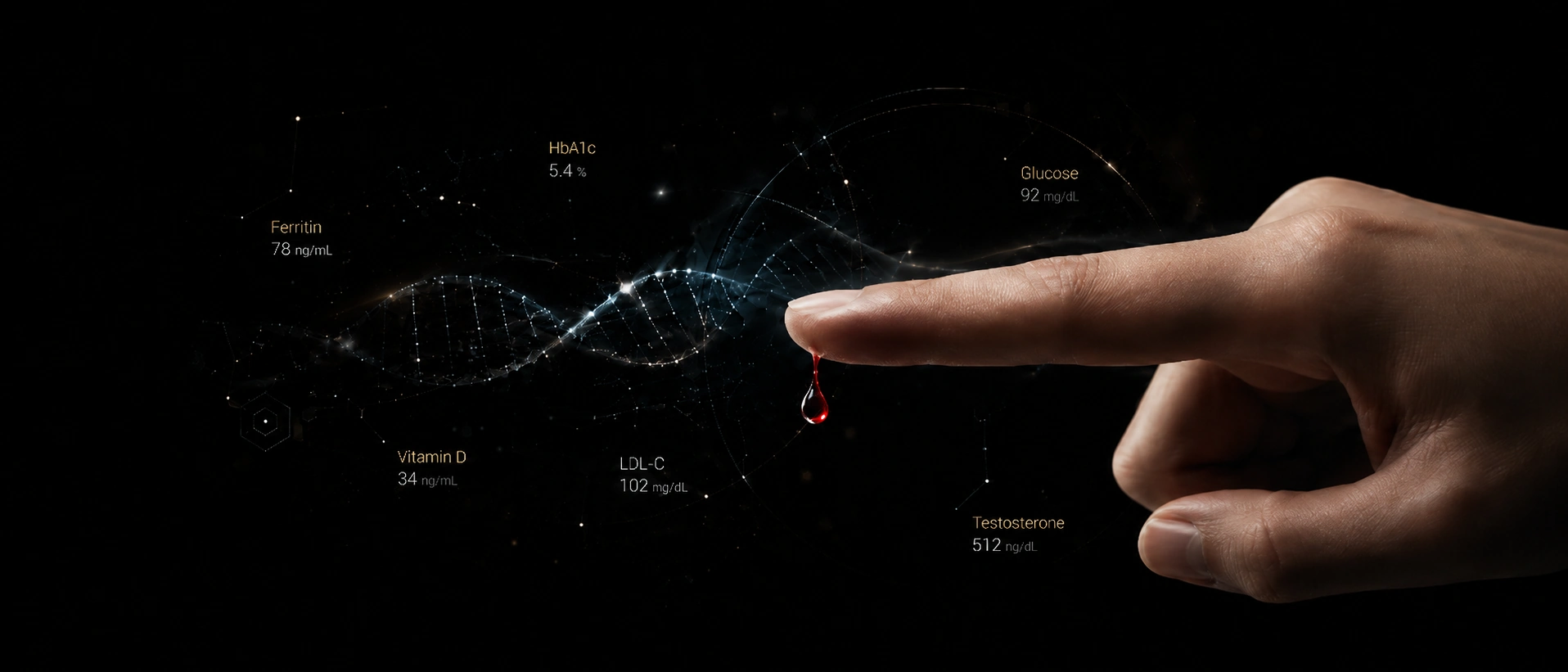
Today, the rise of At-Home Health Tests and direct-to-consumer clinical diagnostics has shattered this outdated model. Advanced finger-prick blood panels, dried-urine hormone kits, comprehensive stool sequencing, and genetic methylation assays allow you to map your internal biochemistry with clinical precision from the comfort of your home.
If you want to move away from guessing your supplement dosages, eliminate hidden subklinische deficiencies, and take total control of your biological longevity, here is the ultimate guide to modern at-home diagnostics.
1. The Limitations of Conventional "Normal" Lab Ranges
Why do so many individuals suffer from chronic fatigue, stubborn weight gain, or brain fog despite pristine annual lab results?
 Advanced at-home testing can make selected biomarkers easier to track outside the clinic.
I. Statistical Reference Populations vs. Optimal Health
Conventional laboratory reference ranges are determined by testing a broad, often metabolically unhealthy cross-section of the local population visiting a hospital. Being flagged as "normal" simply means you fall within the middle 95% of an increasingly sick population, not that your physiological markers are optimized for high performance.
II. The Snapshot Problem
A single fasting blood draw misses dynamic biological shifts, such as postprandial glucose surges, nocturnal cortisol rhythms, or fluctuating micronutrient absorption rates. At-home multi-marker testing allows for comprehensive profiling (such as dried-urine diurnal cortisol curves over 24 hours).
2. The 5 Essential At-Home Diagnostics for Biohackers
To build an actionable personal health dashboard, focus on these core diagnostic categories:
I. Comprehensive Blood Panels (Metabolic & Hormonal)
At-home finger-prick blood kits now test for critical markers that standard doctors rarely check: HbA1c (long-term blood sugar), high-sensitivity CRP (systemic inflammation), Free and Total Testosterone, Thyroid Panels (TSH, Free T3, Free T4, Reverse T3), and Vitamin D3.
II. Advanced Microbiome Stool Sequencing (Metagenomics)
Shotgun metagenomic sequencing kits analyze your stool to map your exact bacterial species diversity, short-chain fatty acid production capacity, fungal overgrowths, and intestinal inflammatory markers like calprotectin. Testing your gut flora removes the guesswork from probiotic and prebiotic protocols.
 A modern at-home testing kit can turn biological samples into actionable insights about your health, metabolism, and nutritional needs.
III. Real-Time Breath Fermentation Monitors (SIBO & IMO)
For immediate post-meal insights, compact handheld breath devices measure exhaled hydrogen (H₂) and methane (CH₄) in real time. This non-invasive tracking can reveal patterns of carbohydrate fermentation in the gut, providing immediate feedback on digestive responses and potential food intolerances.
IV. Dried Urine Hormone Testing (DUTCH Panels)
Instead of a single blood draw, comprehensive urine metabolite kits track free hormone fractions and their downstream clearance pathways over a full 24-hour cycle, revealing how your liver metabolizes estrogen, progesterone, and cortisol.
V. Pharmacogenomics & Genetic Methylation Panels
Your DNA does not change, but knowing your genetic variants (such as MTHFR, COMT, or APOE) allows you to tailor your B-vitamin intake, detoxification protocols, and dietary fats to your specific enzymatic capabilities.
3. The Testing Protocol: From Data to Actionable Intervention
Data without a protocol is just expensive noise. Follow these three steps to turn your at-home lab results into tangible health improvements:
Step 1: Establish Your Baseline Annually
 Personalized biomarker data can help turn daily supplement choices into a more targeted, evidence-informed routine.
Test your core metabolic and hormonal blood markers once a year (ideally at the same time in the morning) to track long-term physiological trends rather than reacting to short-term anomalies.
Step 2: Target Deficiencies with N=1 Precision
If your at-home panel reveals suboptimal Vitamin D3, low Omega-3 index, or elevated inflammatory markers, implement precise, high-purity supplementation or dietary adjustments tailored specifically to your exact numerical deficits.
Step 3: Re-Test After 90 Days
Never guess if a protocol is working. Re-test your primary marker of interest after 12 weeks of lifestyle or supplement adjustments to verify objective biochemical movement.
Stop Guessing, Start Measuring
Your body leaves a clear biochemical trail. Relying on subjective feelings or outdated reference ranges keeps you trapped in a cycle of trial and error.
By taking advantage of clinical-grade at-home testing, you strip away the guesswork, uncover hidden metabolic bottlenecks, and take absolute command of your health span.
Stop wondering what is happening inside your body. Test it, target it, and transform it.
Scientific References & Reading List
-
Direct-to-Consumer Laboratory Testing & Preventative Health: Orth, M. "Direct to Consumer Laboratory Testing (DTCT) - Opportunities and Concerns." EJIFCC 32(2), 209-215 (2021). Read Full Study on PubMed Central (PMC8343044) | Read on PubMed (PMID: 34421490)
-
Clinical Utility of At-Home Biomarker and Biosensor Monitoring: Topol, E. J. "Individualized Medicine From Pre-Womb to Tomb." Cell 157(1), 241-253 (2014). Read Full Study on PubMed Central (PMC3995127) | Read on PubMed (PMID: 24679539) | DOI: 10.1016/j.cell.2014.02.012
-
Personalized Nutrition & Nutrigenomic Testing in Precision Health: Ordovas, J. M. et al. "Personalised nutrition and health." BMJ 361, k2173 (2018). Read Full Study on PubMed Central (PMC6081996) | Read on PubMed (PMID: 29898881) | DOI: 10.1136/bmj.k2173
Disclaimer: The information provided is for educational purposes only and is not intended as medical advice. Always consult with a qualified healthcare professional before interpreting diagnostic laboratory results or starting any new medical protocol.