
Can Whole-Body Red Light Therapy Support Memory in Parkinson’s Disease? New Findings Highlight Promising Benefits
Evidence review & editorial synthesis
Could regular exposure to red and near-infrared light help people with Parkinson’s disease stay mentally sharper?
A new pilot study from South Korea offers an encouraging early signal. After ten weeks of whole-body photobiomodulation, participants performed significantly better on tests of verbal learning and immediate memory recall. The results are particularly interesting because they concern cognitive abilities, not just the movement difficulties most often associated with Parkinson’s.
Photobiomodulation, often shortened to PBM, uses carefully selected wavelengths of red and near-infrared light. Researchers have investigated its effects on tissues, cellular energy processes and neurological function for years.
This pilot takes an intriguing next step: exposing the entire body rather than directing light only at the head.
Ten Weeks of Light Therapy, With Stronger Memory Scores
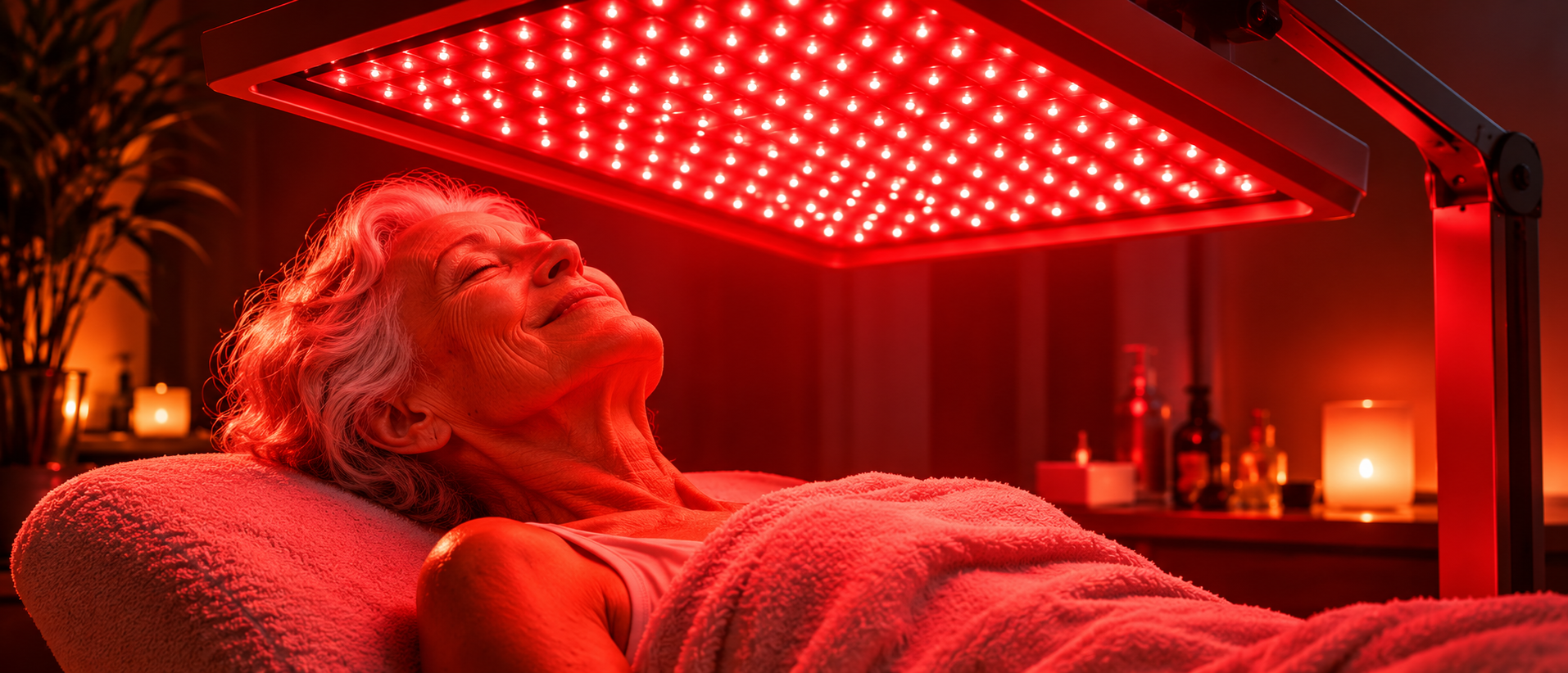
The researchers enrolled 15 people with idiopathic Parkinson’s disease, and 14 completed the program. Participants underwent 30 whole-body sessions across ten weeks, three times per week, with each session lasting 20 minutes.
The device combined four wavelengths: 660, 810, 850 and 930 nanometers. This mix spans red and near-infrared light, ranges also found in some modern light-therapy systems.
The most notable result concerned verbal learning. Scores on a standardized memory test improved with a large within-person statistical effect, reported as an absolute effect size of approximately r = 0.74. Immediate verbal recall also improved, with an effect size of approximately 0.69.
Importantly, both verbal memory findings remained statistically significant after the researchers adjusted for multiple comparisons within their prespecified memory-test family.
These were measurable test-score changes rather than participants simply reporting that they felt sharper.
Visual memory also showed encouraging gains, although those results did not remain statistically significant after adjustment.
The overall Parkinson symptom score declined from 24.86 to 20.29 points, an approximately 18% numerical improvement, but the change did not reach statistical significance. Motor function was generally maintained over the study period.
Why Red and Near-Infrared Light Interest Brain Researchers
Light therapy may sound more familiar from skincare and muscle recovery. Yet photobiomodulation is also attracting attention in neuroscience because red and near-infrared wavelengths can interact with biological processes involved in cell function.
One proposed pathway involves mitochondria, the cellular structures responsible for producing much of the energy that tissues need.
Scientists are investigating whether photobiomodulation can influence mitochondrial signaling and the way cells manage energy demands.
Other lines of research examine nitric oxide signaling, local circulation and inflammatory pathways.
These are relevant areas of investigation because Parkinson’s disease involves more than dopamine loss. Mitochondrial dysfunction, inflammation and altered energy metabolism are among the processes implicated in the condition.
These mechanisms are promising scientific explanations, not proof that this pilot improved memory by any particular pathway.
The study was designed mainly to evaluate whether whole-body treatment was feasible, well tolerated and worth testing more rigorously.
What Makes Whole-Body Photobiomodulation Different?
Much earlier neurological light-therapy research has focused on directing light toward the scalp or head. In this study, participants received whole-body exposure, which raises a different question: Could signals originating in other tissues also influence brain function?
Researchers are increasingly interested in connections between systemic inflammation, metabolism and neurological health.
Whole-body photobiomodulation offers a way to explore those links, although this pilot did not establish which tissues or signaling routes were responsible for the observed changes.
The treatment schedule is also easy to picture: twenty minutes per session, three times weekly, for ten weeks.
No serious adverse events were reported. One participant experienced mild localized hyperpigmentation that resolved and was considered unrelated to the device.
For readers interested in the technology behind the approach, our red and near-infrared light therapy panel guide, available in the Devices section explores common wavelengths, panel designs and the principles behind home-use light therapy.
A consumer panel should not be assumed to reproduce the intensity, exposure geometry or clinical results of this research protocol.
An Encouraging Step Toward Better Cognitive Care
For people living with Parkinson’s disease, remembering information and following conversations can matter enormously in everyday life.
That is why the verbal-memory signal deserves attention even at this early stage.
The findings are not evidence that light therapy reverses Parkinson’s disease or prevents neurodegeneration.
The study was small, had no sham-treatment comparison group and is currently a preprint. Repeated exposure to similar memory tests could partly explain higher scores, so a larger randomized trial is essential.
Related randomized research into photobiomodulation for Parkinson’s disease has also explored possible effects on movement and non-motor symptoms, although results have varied and treatment protocols differ.
Even with those limits, the findings add a useful piece to the growing field of photobiomodulation research.
A non-invasive treatment that can be delivered in regular short sessions, and that now shows measurable cognitive signals in people with Parkinson’s, is worth investigating further.
The next question is whether those improvements hold up when whole-body light therapy is tested against a convincing sham treatment.
If they do, this approach could become an interesting complement to established Parkinson care.
Scientific References & Further Reading
-
Anchor Preprint: Whole-body photobiomodulation therapy in Parkinson's disease: a single-arm feasibility and safety pilot trial with exploratory cognitive signals. (Lee SY, Ahn C, Lee JH, Baik JS, Shin YI. Research Square. November 2026. Preprint. DOI: 10.21203/rs.3.rs-10677352/v1.)
-
Trial Registration: Whole-Body Photobiomodulation for Motor and Cognitive Changes in Parkinson’s Disease. (ClinicalTrials.gov. NCT07271927.)
-
Related Randomized Research: Effectiveness of Photobiomodulation to Treat Motor and Non-Motor Symptoms of Parkinson’s Disease: A Randomised Clinical Trial with Extended Treatment. (Saltmarche AE, Hares O, Bicknell B, et al. Journal of Clinical Medicine. 2025;14(21):7463. This separate trial used a different PBM protocol and did not establish the same verbal-memory benefit.)
Disclaimer: This article is for informational purposes only and does not constitute medical advice. Photobiomodulation remains an investigational approach for Parkinson’s disease and should not replace established neurological treatment. Individuals considering light-based therapies should discuss their suitability with a qualified healthcare professional.