
Can Probiotics Make Your Skin Look Younger? 15 Clinical Trials Reveal Surprising Benefits
Evidence review & editorial synthesis
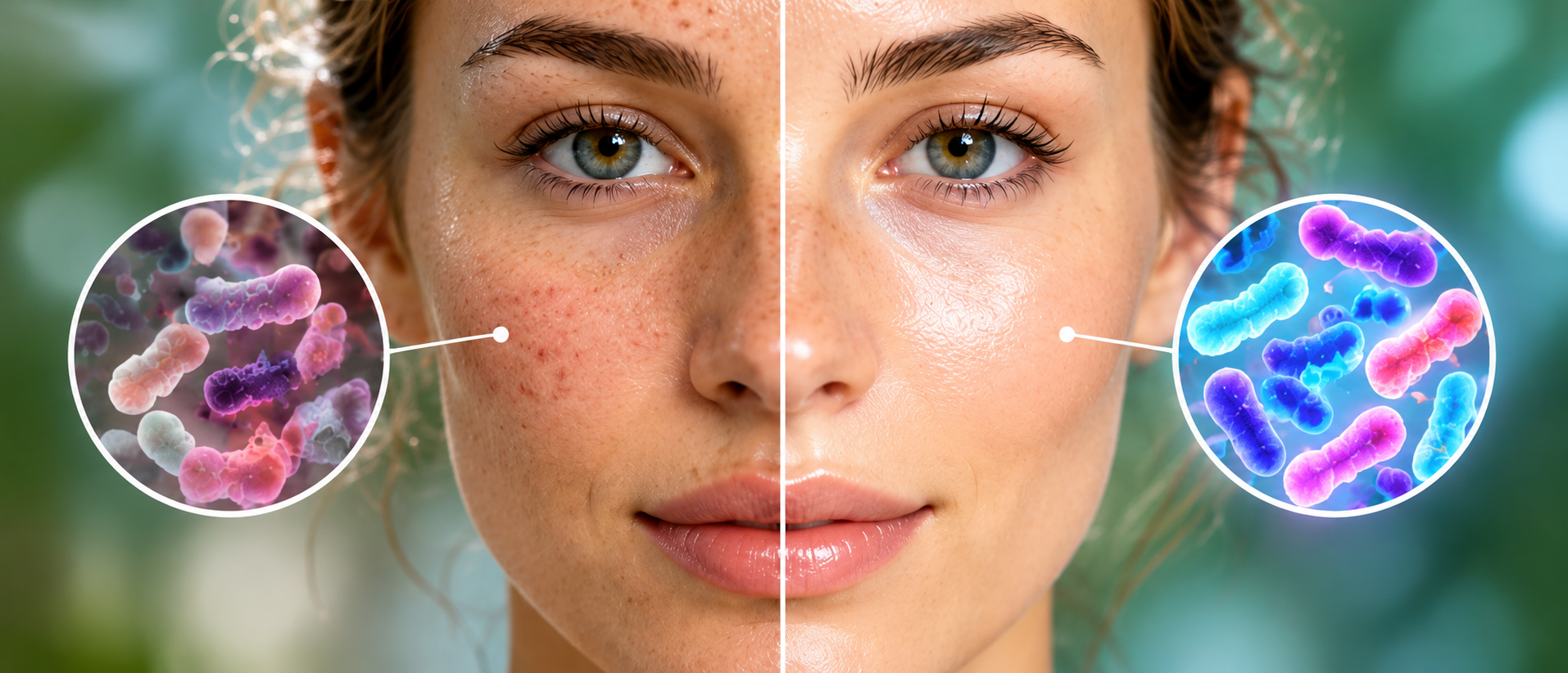
What if part of the secret to smoother, younger-looking skin had less to do with the creams you apply and more to do with the bacteria living inside your gut?
It sounds like an unusual beauty trend. But a growing body of research suggests that specific probiotic bacteria can influence the way skin looks and functions, even when they are swallowed rather than applied to the face.
A 2026 systematic review and meta-analysis in the Journal of Cosmetic Dermatology examined 15 randomized controlled trials involving 867 adults. It found measurable improvements in skin hydration, the skin’s ability to retain water and wrinkle scores compared with placebo.
For beauty science, the surprising possibility is that supporting certain microbial pathways inside the body might help the skin appear healthier on the outside.
15 Clinical Trials Found Measurable Skin Changes
The researchers focused on four characteristics associated with healthy-looking skin: moisture, transepidermal water loss, elasticity and wrinkles.
These were not simply surveys asking whether participants felt more attractive. The trials included objective hydration and barrier measurements as well as instrumental or imaging assessments of skin appearance.
Five trials involving 402 people found significantly improved skin hydration. The pooled standardized effect size was 1.21.
Six trials involving 453 participants showed significantly reduced transepidermal water loss, or TEWL. Its pooled standardized effect size was −1.17. That matters because a stronger moisture barrier allows less water to escape from the skin.
And four trials involving 287 participants found significantly improved wrinkle scores, with a pooled standardized effect size of −1.30.
Those are large standardized differences, not percentages. A wrinkle effect size of −1.30 does not mean that wrinkles disappeared by 130%, or even that their visible depth fell by a particular percentage.
What matters is that randomized human experiments detected differences using skin measurements rather than relying only on personal impressions.
The strongest and most consistent signal was better moisture retention. Improved hydration could make skin look plumper and smoother, with some fine dryness-related lines appearing less noticeable.
Which Probiotics Are Being Studied?
Probiotics are not interchangeable. A particular strain may behave differently from another member of the same species, and the amount, formulation and duration can matter.
One of the most interesting strains is Lactiplantibacillus plantarum HY7714, previously named Lactobacillus plantarum HY7714.
In a dedicated 12-week randomized trial, adults consumed a preparation containing approximately 10 billion colony-forming units of HY7714 per day or placebo. Researchers investigated skin hydration, moisture loss, elasticity and wrinkles and reported favorable results for several measures.
The review also investigated L. plantarum JBMI F5, Lactococcus lactis T21 and H61, L. paracasei CNCM I-2116, Bifidobacterium animalis subsp. lactis Bl-04 and L. rhamnosus GG, among other formulations.
Another study used Lactobacillus casei Shirota alongside isoflavones; that combination cannot establish the independent effect of the bacterium.
The best-supported practical lesson is to look for an exact studied strain rather than assuming that a generic capsule labeled 'probiotics' will reproduce a clinical trial.
Most trials lasted several weeks, with many running eight to twelve weeks. In exploratory analyses, hydration results tended to be more favorable with interventions lasting at least eight weeks.
How Could Gut Bacteria Influence Facial Appearance?
The gut and skin may seem far apart, but both interact with the immune system and depend on carefully regulated protective barriers.
Scientists describe this relationship as the gut–skin axis.
Intestinal bacteria produce metabolites and interact with immune cells. Those interactions may influence inflammatory pathways and other systemic signals relevant to skin barrier maintenance, moisture balance and stress responses.
Experimental studies with HY7714 have investigated intestinal-barrier effects and compounds called exopolysaccharides, which are produced by some bacteria and may participate in gut–skin communication.
Researchers are also interested in how microbial metabolites might influence oxidative stress and inflammation, two processes involved in skin aging. This offers a plausible biological explanation for why an oral supplement might affect the appearance of skin that it never touches directly.
Could people who maintain particularly youthful-looking skin also have distinct microbial communities? Scientists are exploring such connections, but there is not yet evidence that a particular 'young-skin microbiome' causes someone to age more slowly. Sun exposure, genetics, smoking, sleep, nutrition and skincare remain important influences.
What Might This Mean for Your Beauty Routine?
Imagine your skin feeling less dry and looking more evenly hydrated after several weeks of a carefully selected probiotic.
That is a realistic kind of benefit to investigate. Better hydration may make the surface appear smoother, and a better functioning barrier can make the skin more comfortable and resilient to everyday dryness.
The reported improvement in wrinkle scores adds an especially intriguing possibility: some probiotics may eventually become useful additions to routines aimed at maintaining a youthful complexion.
But the current findings do not mean that probiotics erase deep wrinkles, replace sunscreen or reverse the underlying biology of aging. Their most plausible role is as an additional tool alongside established skin care.
For readers interested in the wider effects of gut microbes, our Gut Health guide explores the microbiome, intestinal barriers and everyday approaches to digestive wellbeing.
The main qualification is that hydration and wrinkle estimates differed considerably between trials, some studies were industry-supported, and the evidence for elasticity was inconclusive. Larger independent studies are needed to determine which strains provide the most noticeable benefits.
Even so, the central result is exciting: scientists have moved beyond simply proposing a gut–skin connection. Randomized human studies now show measurable improvements in skin moisture, barrier function and wrinkle scores after some oral probiotic interventions.
It may turn out that one part of tomorrow’s skincare routine begins not on the bathroom shelf, but in the gut.
Scientific References & Further Reading
- Anchor Meta-Analysis: “Oral Probiotics for Improving Skin Hydration, Elasticity, Transepidermal Water Loss, and Wrinkle Reduction in Adults: A Systematic Review and Meta-Analysis of Randomized Controlled Trials.” (Nezhadpour AS, et al. Journal of Cosmetic Dermatology. 2026. DOI: 10.1111/jocd.71124.)
- Human Strain Trial: “Clinical Evidence of Effects of Lactobacillus plantarum HY7714 on Skin Aging: A Randomized, Double Blind, Placebo-Controlled Study.” (Lee DE, et al. Journal of Microbiology and Biotechnology. 2015.)
- Gut–Skin Mechanism: “Regulatory effects of Lactobacillus plantarum HY7714 on skin health by improving intestinal condition.” (PLOS ONE. 2020.)
- Bacterial Metabolites: “Exopolysaccharide from Lactobacillus plantarum HY7714 Protects against Skin Aging through Skin-Gut Axis Communication.” (Molecules. 2021.)
- Broader Research: “Probiotics, Prebiotics, and Synbiotics as Oral Supplements for Skin Health, Function, and Disease Throughout the Life Course.” (Review of oral microbiome interventions and skin outcomes.)
Disclaimer: This article is for informational purposes only and does not constitute medical advice. It is not a substitute for diagnosis, treatment, or individualized medical care.