
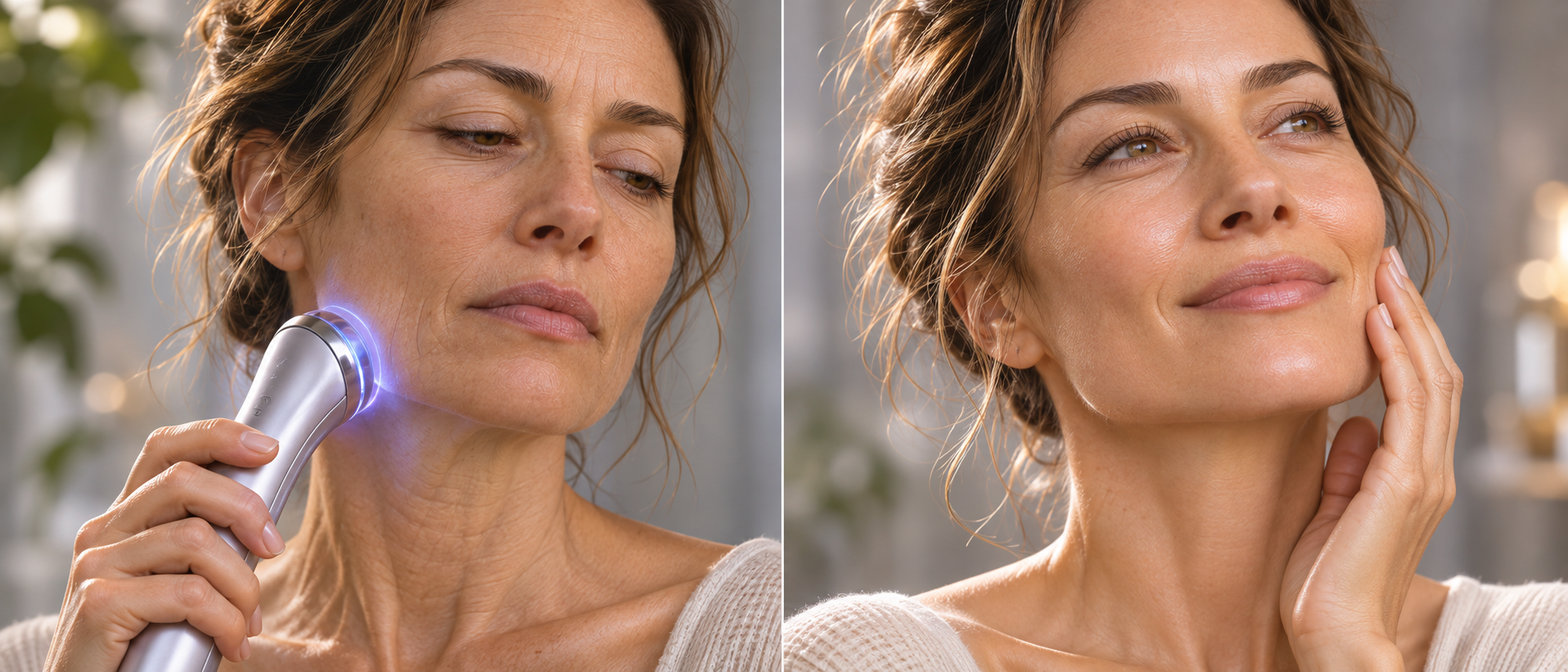
Zero-Downtime Wrinkle Reduction? What a 2026 VEMFtherapy Study Found for Face and Neck
Evidence review & editorial synthesis
Most aesthetic treatments that visibly soften wrinkles ask patients to accept a trade-off: needles, thermal injury, redness, or several days of social downtime while the skin barrier recovers. A July 2026 clinical study in the Journal of Cosmetic Dermatology examines an in-clinic alternative called VEMFtherapy, also known commercially as Biodermogenesi, that aims to improve aging face and neck skin without surface damage.
In the prospective single-arm study of 28 adults aged 30 to 78, mostly women, six weekly sessions improved clinical wrinkle scores by approximately 28–29%, alongside improvements in imaging-based assessments. No recovery downtime was reported, and treatment was generally well tolerated. Patients described the sessions as pleasant and relaxing, pointing to a potentially gentler approach to cosmetic skin rejuvenation.
How Electromagnetic Fields and Vacuum Work Together
VEMFtherapy pairs low-intensity electromagnetic fields with gentle, controlled negative-pressure vacuum massage delivered through a specialized clinical handpiece. Rather than ablating the outer epidermis or creating controlled thermal wounds like fractional lasers or radiofrequency microneedling, the method seeks to stimulate local microcirculation, cellular metabolism, and dermal extracellular matrix renewal beneath an intact skin barrier.
Because the treatment is designed to avoid surface injury, patients generally require little recovery time. That profile may be especially appealing for the neck and jawline, areas that often show early laxity and horizontal lines yet can be sensitive to aggressive resurfacing procedures.
What 3D Imaging and Patient Scales Measured
To avoid relying purely on before-and-after impressions, clinicians Fabrizio Lombardo, Chiara Scacciati, Camilla Fabris, and Giovanni Menchini evaluated participants using 3D optical imaging systems, LifeViz Quantify and Visia, alongside two clinical wrinkle grading scales and the validated Face-Q patient-reported outcome questionnaire.
After six weekly treatments, average wrinkle severity scores declined by 29.1% on the WES scale and 27.5% on the WAS scale. VISIA imaging also recorded a 10.4% improvement in an eye-wrinkle measurement. These percentages represent changes in grading and imaging metrics rather than equivalent reductions in actual wrinkle depth.
Face-Q scores reflected higher patient satisfaction with facial appearance and treatment comfort. No recovery downtime was reported. One temporary episode of petechiae, small superficial skin bleeding, resolved within a day.
Clinic Technology vs. At-Home Skin Devices
VEMFtherapy relies on specialized electromagnetic and vacuum equipment operated in aesthetic clinics, rather than an ordinary home skincare device.
For people exploring non-invasive facial treatments at home, some consumer devices combine related technologies. The FOREO FAQ 102 facial device, for example, combines radiofrequency, electrical muscle stimulation (EMS), and LED light therapy. These technologies target skin firmness and facial appearance through different mechanisms, although the device does not reproduce clinical VEMFtherapy and the study's results cannot be transferred to it.
Readers comparing non-invasive aesthetic technologies with broader at-home and clinical research, including specific wavelengths investigated for collagen support, can explore the evidence on photobiomodulation and red light therapy.
For anyone considering in-clinic energy-based treatments, the practical distinction comes down to goals and recovery tolerance. Ablative lasers and injectables remain established options for deeper wrinkles or volume loss, whereas electromagnetic-vacuum sessions are being investigated for improving skin appearance without prolonged recovery.
What the Study Leaves Open
Because all 28 participants received active VEMFtherapy without a sham or untreated control group, the study cannot separate biological device effects from massage, hydration, or expectation effects. It also cannot establish whether the improvements persist over the longer term. The proposed regenerative mechanisms were not directly demonstrated, and larger controlled trials are needed to establish efficacy and safety.
Even with those limitations, the observed improvements in wrinkle grading, imaging assessments, and patient satisfaction suggest that VEMFtherapy deserves further investigation as a non-invasive approach to facial and neck skin rejuvenation.
Scientific References & Further Reading
- Anchor Study: “Our Experience With VEMFtherapy on Skin Aging of Face and Neck.” (Lombardo F, Scacciati C, Fabris C, Menchini G. J Cosmet Dermatol. 2026 Jul 19;25(7):e70778. doi:10.1111/jocd.70778. PMID: 43047031.)
Disclaimer: This article is for informational purposes only and does not constitute medical advice. It is not a substitute for diagnosis, treatment, or individualized medical care.
As an Amazon Associate, Health Science Hub earns from qualifying purchases.