
The 15-Minute Bed Rule: How a Single Behavioral Trick Restores Sleep Efficiency
Evidence review & editorial synthesis
Can a single 15-minute behavioral rule break chronic insomnia without full multi-week therapy or medication? A pragmatic randomized controlled trial published in Behavioral Sleep Medicine suggests that extracting the core quarter-of-an-hour rule from classical stimulus control therapy dramatically cuts sleep-onset latency and nighttime wakefulness. By instructing chronic insomnia patients to leave the bed if they remain awake for roughly 15 minutes, researchers achieved a 14% boost in subjective sleep efficiency following just one 60-minute clinical session.
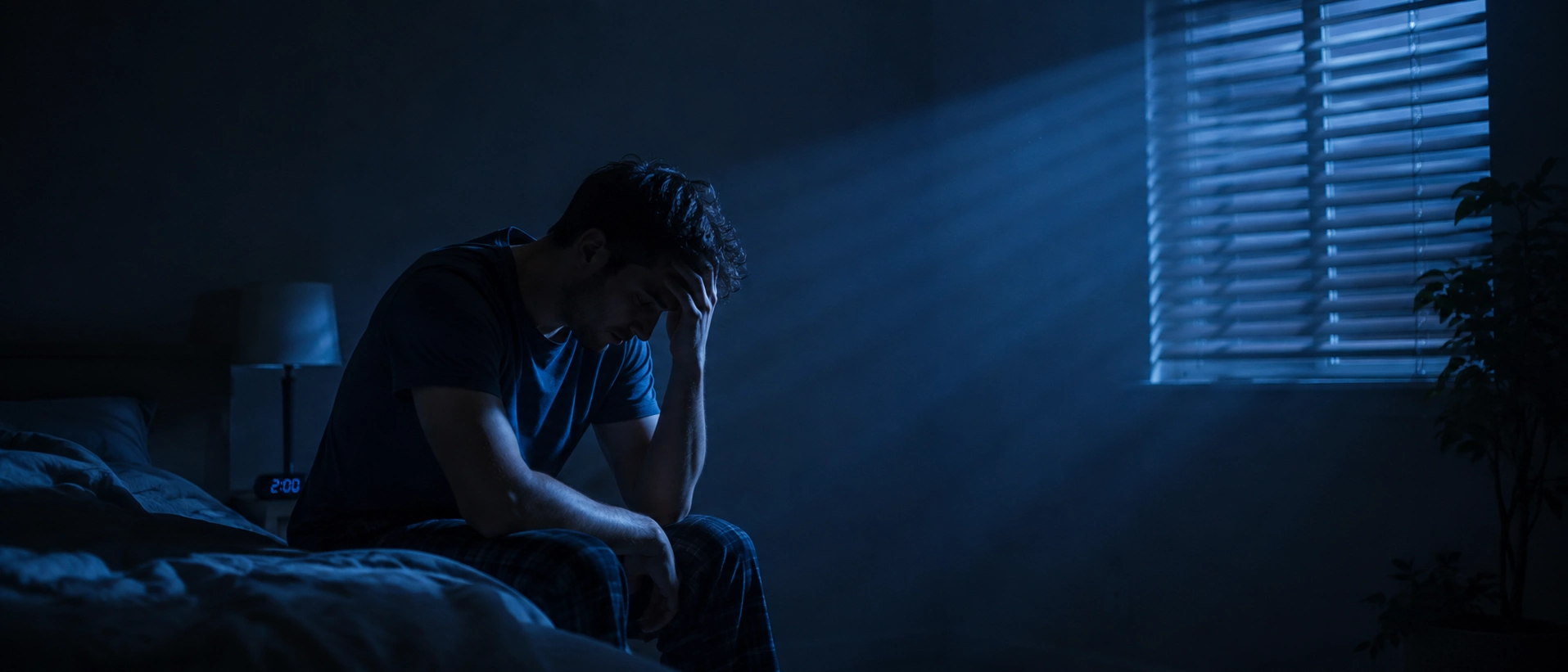
For millions who lie awake watching the clock, the mattress eventually stops being a sanctuary and becomes an arena of frustration. This trial proves that breaking that physiological association does not require months of intensive cognitive behavioral therapy for insomnia (CBT-I) to yield immediate, practical relief.
Retraining the Brain's Sleep Association
Classical Stimulus Control Therapy (SCT) rests on basic conditioning principles: the bed must be paired exclusively with rapid sleep onset and sexual activity. When individuals spend hours tossing, turning, or ruminating, the brain forms a classic Pavlovian link between the sleeping environment and heightened autonomic arousal.
The trial evaluated 44 adults diagnosed with primary care chronic insomnia, randomizing them into three groups: the Quarter-of-an-Hour Rule implemented out of bed, the rule implemented in bed, or a self-monitoring control group. Delivered across a single brief consultation supported by phone follow-up, both active 15-minute rule arms demonstrated statistically significant reductions in sleep-onset latency and wake-time after sleep onset compared to controls.
Subjective Sleep Efficiency vs Objective Architecture
Interestingly, two nights of home polysomnography (PSG) recorded pre- and post-treatment revealed that objective sleep architecture metrics remained largely stable across groups. However, the intervention produced a critical clinical outcome: a marked reduction in subjective-objective sleep discrepancy.
Insomnia is heavily driven by sleep state misperception—where patients feel entirely awake despite recording sleep-like electroencephalographic activity. By enforcing the 15-minute threshold, participants realigned their subjective perception with physical sleep, reporting a 14% overall gain in sleep efficiency. Breaking the cycle of nocturnal anxiety allowed subjects to register their actual sleep depth more accurately.
Implementing the 15-Minute Reset at Home
Translating this trial into nightly practice requires minimal setup but strict behavioral consistency:
- Set a Soft Clock: Estimate roughly 15 minutes of wakefulness without constantly checking a bright digital clock, which increases cognitive arousal.
- Break the Spatial Link: If still awake, get out of bed and transition to a dimly lit room to engage in a low-stimulation activity like light reading.
- Return Only When Sleepy: Re-enter the bedroom exclusively when physical drowsiness returns, resetting the conditioned response.
While long-term multi-center trials are needed to evaluate multi-year durability, this brief intervention offers an immediate, accessible alternative to sedative hypnotics or costly multi-session programs.
Scientific References & Further Reading
- Anchor Study: “Efficacy of the 'Quarter-of-an-Hour-Rule' Single Instruction Derived from Stimulus Control Therapy for Insomnia: A Pragmatic Open-Label, Randomized Controlled Trial.” (Espie CA, Tse KYK, Malaffo M. Behav Sleep Med. 2026;24(4):1080-1091.)
Disclaimer: This article is for informational purposes only and does not constitute medical advice. It is not a substitute for diagnosis, treatment, or individualized medical care.