
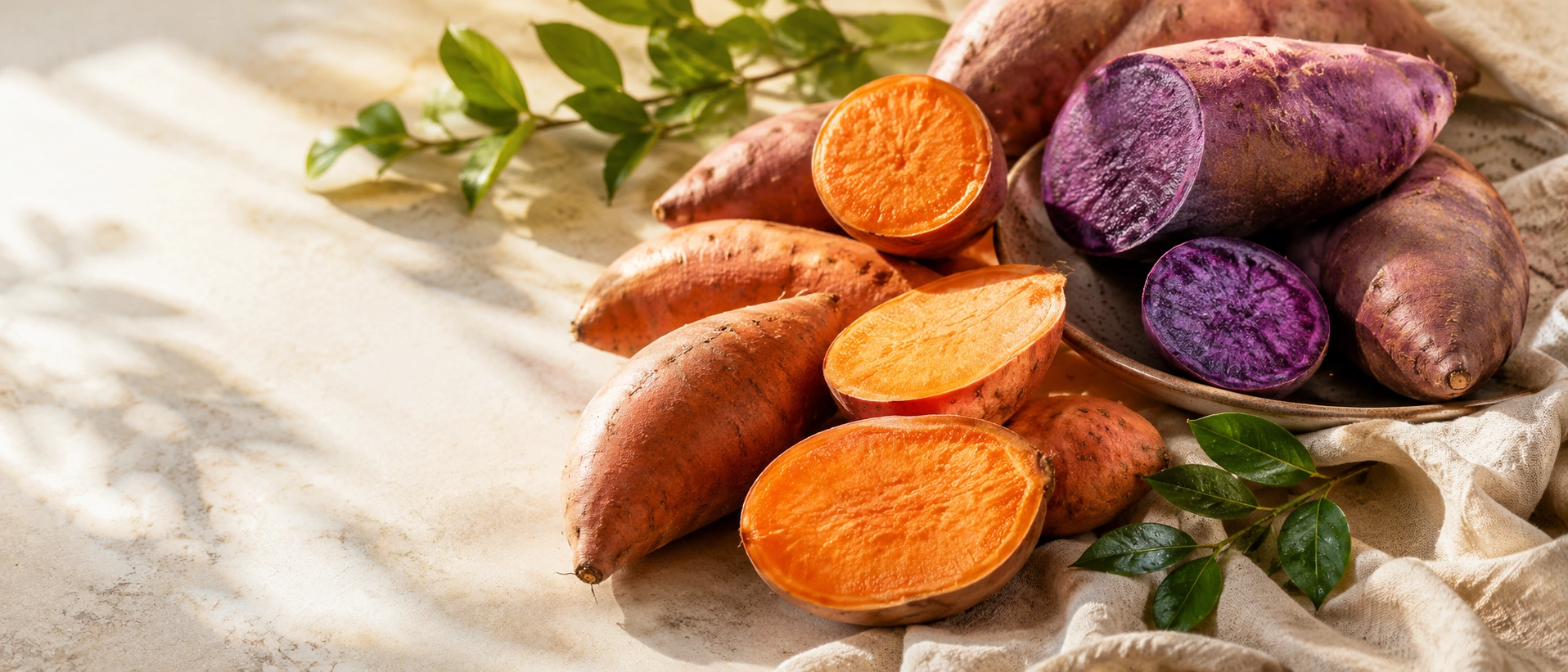
Sweet Potatoes Are a Longevity Power Food Hiding in Plain Sight
Evidence review & editorial synthesis
Sweet potatoes are easy to underestimate. They look simple, cheap, and almost too ordinary to belong in the longevity conversation. But the science around their antioxidant compounds, carotenoids, and metabolic effects makes them far more interesting than most people realize.
No, there is no giant human trial proving that sweet potatoes literally extend lifespan.
But if you want a food that appears to support several of the systems that tend to age badly (blood sugar control, oxidative stress, inflammation, and nutrient status), sweet potatoes make a surprisingly strong case.
Why Sweet Potatoes Are More Than Just “Healthy Carbs”
Most people think of sweet potatoes as a carbohydrate source with some vitamin A.
That undersells them.
Depending on the variety, sweet potatoes contain a mix of:
- beta-carotene and other carotenoids, especially in orange-fleshed varieties
- phenolic acids
- flavonols
- flavanones
- anthocyanins, especially in purple sweet potatoes
This matters because these compounds do not just “sit” inside the plant. Reviews of the literature suggest they interact with multiple pathways tied to metabolic health, oxidative stress, and inflammation.
In plain English: sweet potatoes may be doing much more than providing calories.
The Metabolic Story Is the Most Exciting
One recent review pulled together evidence showing that sweet-potato bioactives may help improve insulin sensitivity, lower blood glucose, and inhibit carbohydrate-digesting enzymes such as alpha-amylase and alpha-glucosidase.
That is a strong mechanistic pattern because it suggests sweet potatoes may influence blood-sugar handling from several angles rather than through one narrow effect.
(Foods, 2023)
(Full text)
This does not mean that eating sweet potatoes gives you magical glucose control. But it does mean the food contains compounds that keep showing up in anti-diabetic and metabolic-health research.
And in a longevity context, that is highly relevant. Blood-sugar instability, insulin resistance, and poor metabolic flexibility are some of the core patterns people are trying to avoid as they age.
Purple Sweet Potatoes Look Especially Interesting
Purple sweet potatoes deserve special attention.
A recent review focused on their anthocyanins, the deep purple pigments that also make blueberries so interesting. These compounds appear to:
- scavenge free radicals
- support antioxidant enzymes such as superoxide dismutase (SOD) and catalase
- reduce inflammatory signaling, including NF-kB-related pathways
- improve insulin sensitivity in preclinical models
The authors also note an important limitation: bioavailability is not perfect, and better human studies are still needed.
(PubMed)
(QxMD summary)
That is the pattern you see again and again in plant-food longevity research: the signal is exciting, but the human evidence still lags behind the mechanistic promise.
Still, purple sweet potatoes look like one of the more compelling “food first” sources of protective pigments.
Not All Sweet Potatoes Are Equal
One especially interesting animal study compared several sweet-potato varieties in diabetic rats.
The result: orange-fleshed sweet potatoes showed the strongest overall anti-diabetic effects, including improvements in glycemic control, insulin-related measures, HOMA-IR, pancreatic histology, and lipid profile. The study also reported gene-expression changes such as increased GLP-1 and decreased DPP-4, suggesting deeper metabolic effects rather than a surface-level change.
(PubMed)
(ScienceDirect)
Animal data are not the same as human outcomes. But this does hint that the exact variety matters.
That gives you a useful practical takeaway:
- orange-fleshed varieties look especially valuable for provitamin A and metabolic support
- purple varieties look especially attractive for anthocyanin-related antioxidant benefits
The Leaves Are Probably Underrated Too
Most people eat the root and ignore the leaves.
That may be a mistake.
A comparative analysis found that sweet-potato leaves had much higher antioxidant activity and phenolic content, while the roots contained more beta-carotene. In other words:
- the roots are especially valuable for provitamin A
- the leaves appear especially strong as an antioxidant-rich plant food
That makes sweet potato a more interesting “whole plant” than most people realize.
(Agriculture & Food Security, 2024)
If you can access the leaves in a culinary context, they may be worth treating like other dark leafy greens.
Best Ways to Eat Sweet Potatoes
You do not need sweet-potato extract capsules or a functional-food lab.
The practical version is simple.
Best everyday options
- baked or steamed sweet potatoes
- roasted sweet potato wedges
- mashed sweet potato with olive oil or yogurt
- cooled and reheated sweet potatoes in mixed meals
- purple sweet potatoes when available
- orange-fleshed sweet potatoes as the reliable default
To get more from the carotenoids
Pair them with a little fat, for example:
- olive oil
- avocado
- Greek yogurt
- tahini
- eggs alongside the meal
That helps with absorption of fat-soluble carotenoids such as beta-carotene.
Similar foods worth pairing or rotating with sweet potatoes
If you like the idea of nutrient-dense, colorful plant foods, similar choices include:
- carrots – rich in provitamin A carotenoids
- pumpkin and butternut squash – carotenoid-rich and easy to use
- red cabbage – another anthocyanin source
- blueberries and blackberries – polyphenol-rich companion foods
- spinach and kale – strong antioxidant leafy greens
- purple potatoes – another colorful option with useful pigments
A very simple longevity-friendly meal could be:
baked sweet potato + olive oil + Greek yogurt or tahini + leafy greens + berries on the side
That is not a miracle intervention. It is just a strong nutritional pattern.
A Functional Food That Still Feels Like Real Food
One nice thing about sweet potatoes is that they still work as actual food.
A study using orange-fleshed sweet potato in composite bread found that substantial beta-carotene was retained, antioxidant activity remained measurable, and the product showed alpha-amylase and alpha-glucosidase inhibitory activity.
In other words, sweet potatoes can be used in palatable everyday foods without losing all of their functional value.
(PubMed)
(Wiley)
That may sound less glamorous than a supplement, but it is actually one of the biggest strengths of the food: you can keep eating it.
The Longevity Case
Sweet potatoes are not exciting because of one sensational human longevity trial.
They are exciting because they combine several traits that make a food worth betting on:
- nutrient density
- strong provitamin A potential
- antioxidant pigments
- anti-inflammatory potential
- promising metabolic effects
- practical everyday usability
The longevity world loves exotic solutions. Sweet potatoes may be one of the most overlooked answers sitting in the produce aisle.
Scientific References & Further Reading
-
Anti-Diabetic Mechanisms & Bioactives: “Sweet Potato Bioactive Compounds and Their Potential Role in Metabolic Health and Diabetes.” (Foods, 2023)
-
Purple Sweet Potato Anthocyanins: “Anthocyanins from Sweet Potatoes: Bioavailability, Mechanisms of Action, and Therapeutic Potential in Diabetes and Metabolic Disorders.”
-
Comparative Effects of Sweet Potato Varieties: “Comparative In Vivo Effects of Sweet Potato Varieties in Diabetic Rats.”
-
Roots vs. Leaves: “Comparative Nutritional and Antioxidant Properties of Sweet Potato Roots and Leaves.” (Agriculture & Food Security, 2024)
-
Functional Food Application: “Nutritional, Antioxidant, and Enzyme-Inhibitory Properties of Bread Enriched with Orange-Fleshed Sweet Potato.”
-
Sweet Potato Leaves & Oxidative Stress: “Effects of Aqueous Extract of Ipomoea batatas (Sweet Potato) Leaves on the Frontal Cortex of Diabetic Wistar Rats.”
Disclaimer: This article is for informational purposes only and does not constitute medical advice. Preclinical and mechanistic findings are not the same as proven clinical outcomes in humans.