
Nature Already Built Anti-Aging Machines: These Animals Show What Humans Are Missing
Evidence review & editorial synthesis
Some animals seem to break the normal rules of biology. They live too long, resist cancer too well, survive too much damage, or regenerate in ways humans can only dream of.
That does not mean we can simply copy-paste their genes into people.
But it does mean evolution has already run millions of experiments in longevity.
Some of the results are astonishing.
The Bowhead Whale: A 200-Year Mammal With a Genome Built for Survival
The bowhead whale may be the most impressive mammalian longevity story on Earth.
It can live for more than 200 years, grows to enormous size, and should, in theory, face a massive cancer problem. More cells usually means more opportunities for mutations. More years alive means more time for things to go wrong.
Yet bowhead whales appear unusually resistant to age-related disease.
When researchers sequenced the bowhead whale genome, they found changes in genes linked to DNA repair, cell-cycle control, cancer resistance, and aging. Among the most interesting were genes such as ERCC1 and PCNA, both connected to genome maintenance and DNA replication fidelity.
The message is simple but profound:
If a mammal wants to live for two centuries, it needs extraordinary systems for protecting its genome.
Humans repair DNA too. Bowhead whales appear to have evolved a more extreme version of that survival strategy.
The Naked Mole-Rat: The Rodent That Refuses to Get Cancer
The naked mole-rat is not beautiful.
It is, however, one of the strangest longevity animals ever studied.
A mouse of similar size may live only a few years. Naked mole-rats can live for 30 years or more, show unusually slow aging, and are famous for extraordinary cancer resistance.
One of their most fascinating defenses involves a substance called high-molecular-mass hyaluronan.
Humans also have hyaluronan. But naked mole-rats produce an unusually large version of it in their tissues. Researchers found that this giant hyaluronan appears to help trigger strong early contact inhibition, meaning cells stop growing when they become crowded instead of continuing toward tumor formation.
In simple terms:
Their tissues may be better at telling suspicious cells to stop before cancer begins.
That is a very different kind of longevity lesson. Not just “repair damage,” but prevent dangerous cell behavior early.
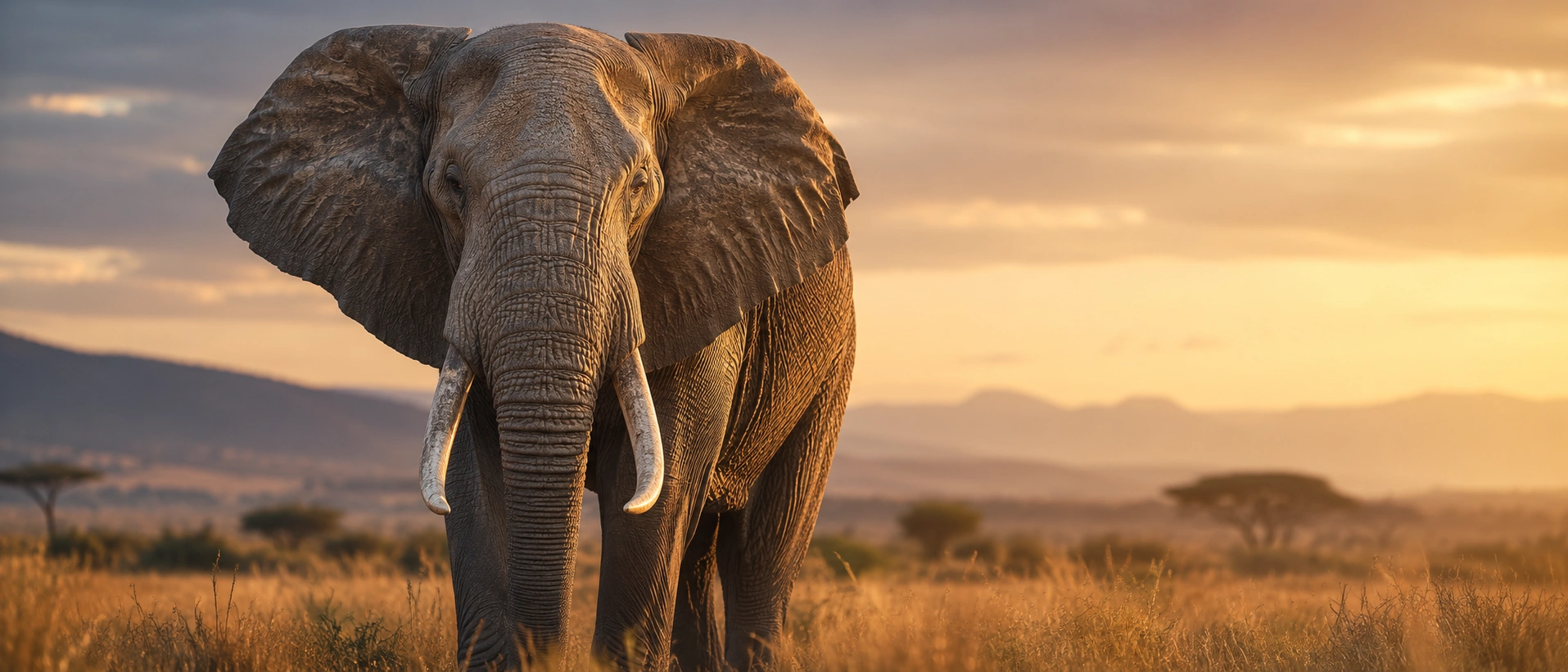
Elephants: Too Big to Be This Cancer-Resistant
Elephants create one of biology’s best puzzles.
They are huge. They have far more cells than humans. They live for decades.
By simple probability, they should get a lot of cancer.
But they do not get as much cancer as expected. This paradox is one version of Peto’s paradox: large, long-lived animals do not always have higher cancer rates, even though they have more cells at risk.
One reason may be TP53, the famous tumor-suppressor gene.
Humans have one TP53 gene inherited from each parent. Elephants carry many TP53 copies. In one major study, elephant cells showed a stronger tendency to undergo apoptosis, or programmed cell death, after DNA damage.
That sounds harsh, but it makes biological sense.
If a cell is badly damaged, the safest option may not be repair.
It may be elimination.
Elephants may survive their size by being ruthless with damaged cells.
Tardigrades: Tiny Survival Tanks With DNA Armor
Tardigrades are not long-lived in the same way whales are long-lived.
They are interesting for a different reason: they can survive conditions that would destroy most animals.
Radiation. Desiccation. Freezing. Extreme environments.
One of the most famous discoveries is a tardigrade-specific protein called Dsup, short for Damage suppressor.
Researchers showed that when Dsup was expressed in human cultured cells, it reduced X-ray-induced DNA damage by around 40%.
That is the kind of result that makes you stop reading for a second.
A tiny extremophile evolved a protein that can physically help protect DNA from damage, and in a laboratory setting, that protective mechanism could partly transfer into human cells.
This does not mean tardigrade genes are about to make humans indestructible.
But it does show something thrilling:
Nature has invented DNA-protection strategies that human biology does not naturally use.
The Real Lesson: Longevity Is Not One Trick
These animals do not all survive the same way.
The bowhead whale appears to emphasize genome maintenance and cancer resistance across an enormous, long-lived body.
The naked mole-rat uses unusual tissue biology and early anti-cancer defenses.
The elephant carries extra tumor-suppression capacity and aggressively removes damaged cells.
The tardigrade evolved molecular armor against environmental damage.
Different animals. Different strategies. Same larger theme.
Long life seems to require:
- better DNA repair
- stronger cancer suppression
- cleaner removal of damaged cells
- more resilient proteins and tissues
- tighter control over stress and metabolism
This is why longevity science is so fascinated by unusual animals. They are not just curiosities. They are biological case studies.
What This Could Mean for Human Longevity
Humans will not become whales, elephants, mole-rats, or tardigrades.
But studying them may reveal targets for future medicine.
A cancer researcher may learn from elephant TP53.
A tissue-aging researcher may learn from naked mole-rat hyaluronan.
A genome-stability researcher may learn from the bowhead whale.
A radiation-biology researcher may learn from tardigrade Dsup.
The goal is not to imitate the whole animal.
The goal is to identify the mechanism.
Because if evolution has already solved a biological problem somewhere, science can ask the next question:
Can we translate even part of that solution into humans?
That is what makes these animals so important.
They are not myths. They are not motivational metaphors. They are living proof that aging biology has more range than humans experience.
Nature has already built creatures with better defenses against time. Longevity science is trying to read the manual.
Scientific References & Further Reading
-
Naked Mole-Rat Cancer Resistance: “High-Molecular-Mass Hyaluronan Mediates the Cancer Resistance of the Naked Mole Rat.”
-
Elephant TP53 & Cancer Resistance: “Potential Mechanisms for Cancer Resistance in Elephants and Comparative Cellular Response to DNA Damage in Humans.”
-
Bowhead Whale Genome & Longevity: “Insights into the Evolution of Longevity from the Bowhead Whale Genome.”
-
Tardigrade Dsup & DNA Protection: “Extremotolerant Tardigrade Genome and Improved Radiotolerance of Human Cultured Cells by Tardigrade-Unique Protein.”
-
mTOR Inhibition & Mammalian Lifespan: “Rapamycin Fed Late in Life Extends Lifespan in Genetically Heterogeneous Mice.”
Disclaimer: The information provided is for educational purposes only and is not intended as medical advice. Research on unusually long-lived or stress-resistant animals is highly relevant to aging biology, but animal adaptations cannot be directly translated into human longevity treatments without extensive experimental and clinical validation. Gene-based, pharmacological, and cellular interventions targeting aging pathways may carry significant risks and should not be used outside appropriate medical or research settings.